Keep microwave input and output power separate
Read the label attached to a watt figure before putting it in an electricity estimate.
Updated:

Copy the field label with the number
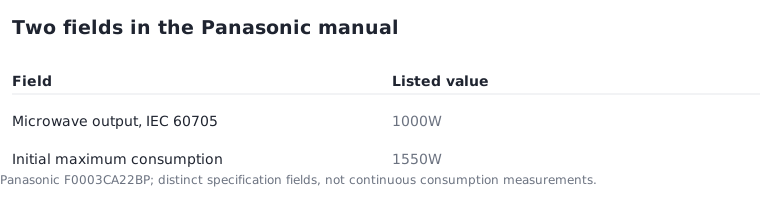
The Panasonic NN-ST45KW/ST46KB/ST48KS manual lists a microwave output of 1000W under IEC 60705 and a separate initial maximum power consumption of 1550W. These describe different fields in that document. Copy the label and its context with each figure rather than collecting an unqualified watt number from a headline.
This distinction matters when you are organising an electricity scenario. Output is not automatically the power drawn from the socket. Equally, an initial maximum field is not a promise that the appliance draws that amount continuously throughout a session. We have not measured this model's energy use.
Panasonic NN-ST45KW/ST46KB/ST48KS operating instructions F0003CA22BP ?
Keep a fictional calculation visibly fictional
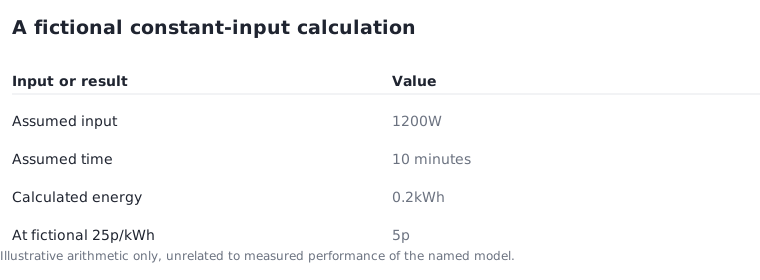
For a simple example unrelated to that product, assume a constant electrical input of 1200W for 10 minutes. Convert 1200W to 1.2kW and multiply by one sixth of an hour: the result is 0.2kWh. At a fictional tariff of 25p per kWh, that would cost 5p under the stated assumptions.
The calculation is useful because every input is visible. It does not predict the energy of reheating a meal, account for cycling or prove that a candidate is cheaper to use. If the assumed input or duration changes, the result changes with it. Label the result as a scenario, not a tested cost.
Do not resolve a confusing specification by guessing
If a table contains fields that appear inconsistent, preserve the original labels and seek clarification. Do not silently rewrite the figures into a tidier relationship or publish an efficiency ratio whose inputs you have not established. A product number copied from a retailer can also refer to a different variant or market.
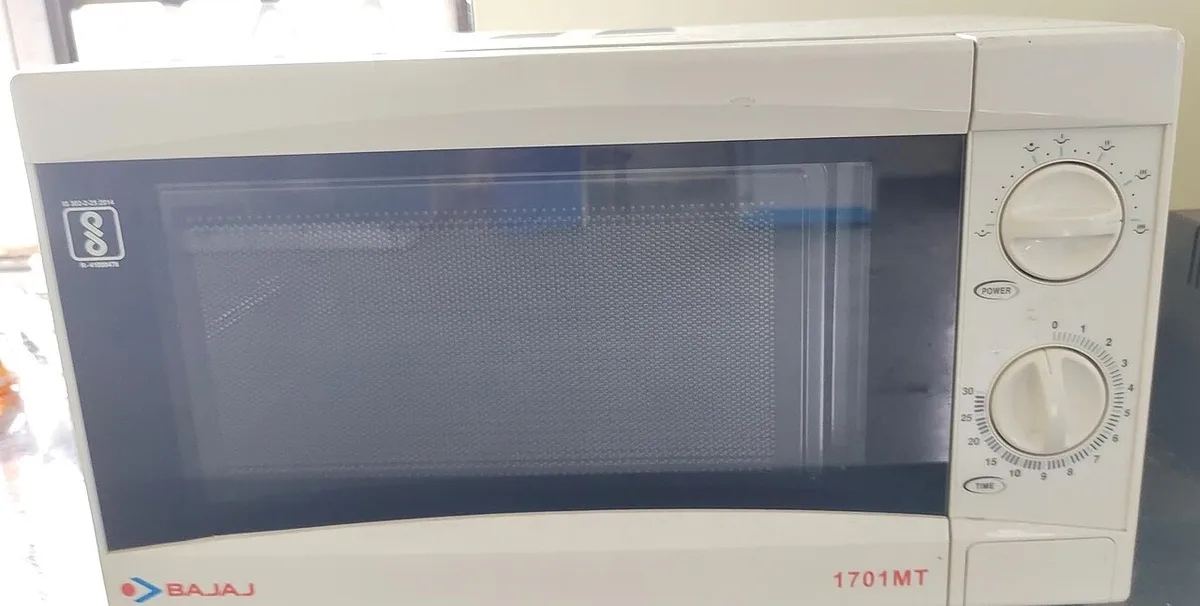
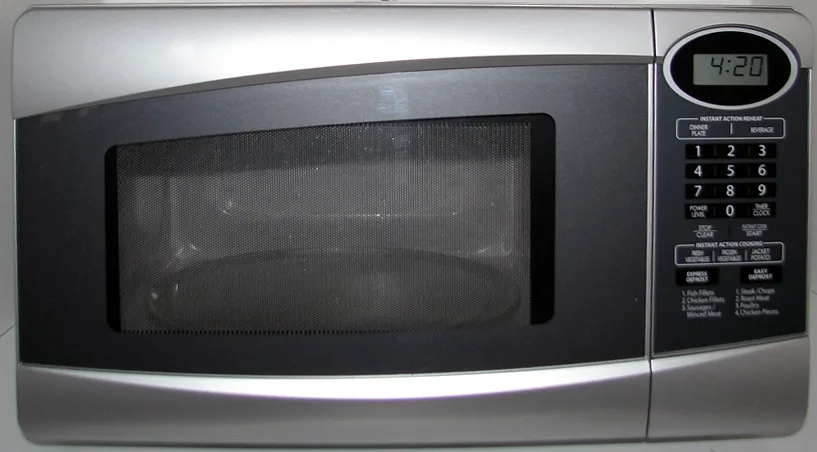
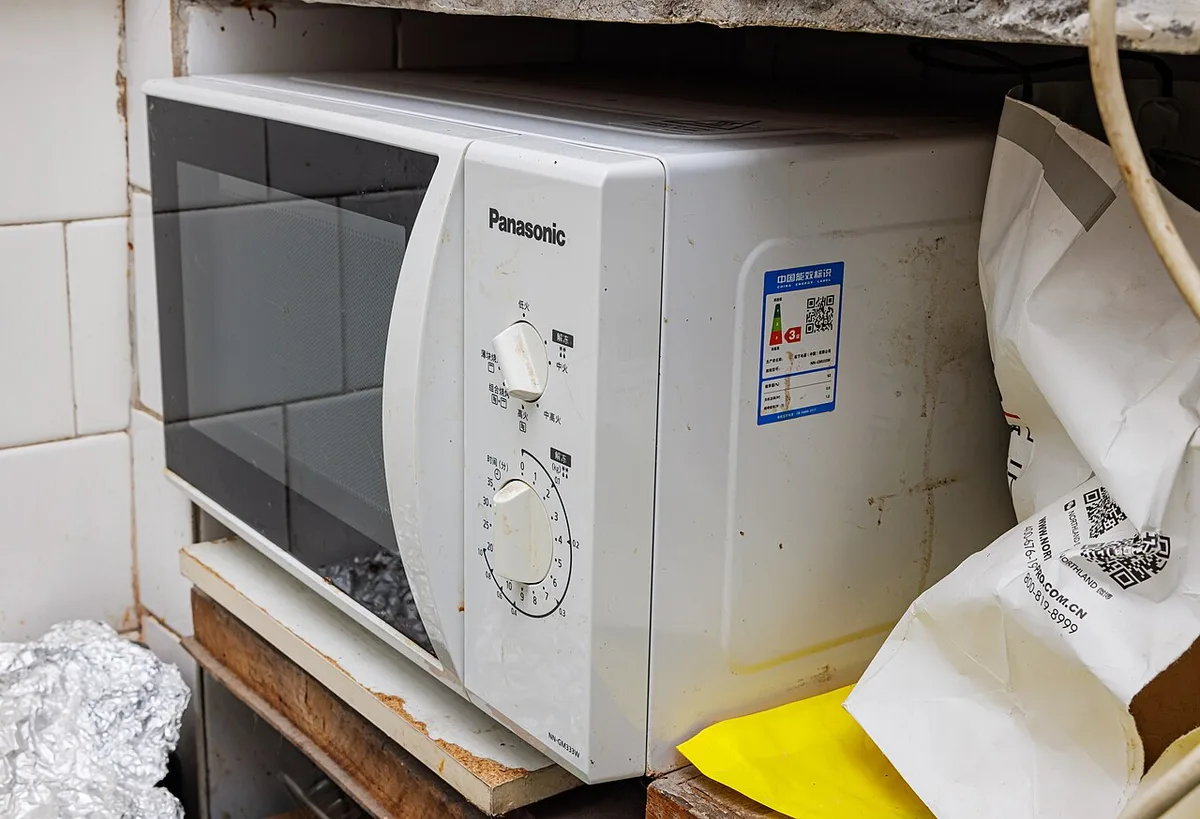
The photographs here show exterior interfaces on historical appliances. Their control layouts cannot settle the meaning of another model's specification table. A visible watt marking, if present, still needs its surrounding label and the relevant documentation before it belongs in a cost comparison.
Separate cooking instructions from cost planning
A recipe instruction, a selectable power level and an electrical consumption field serve different purposes. Keep them in separate notes. This guide provides no advice on adjusting a food's heating time or deciding whether it has been prepared safely. Use the appropriate instructions for that task rather than deriving a cooking method from a cost calculation.
When comparing candidates, make a column for the exact source of any electrical input you intend to use. If that field is missing, leave it unresolved. You can still compare clearly labelled hypothetical scenarios, provided you do not attach the results to a real product as measured performance.
Use the result to improve the question
Save the model, field label, source revision, assumed duration and tariff together. This makes a later correction straightforward: you can replace one input without losing track of the calculation's purpose. Our session tool uses the same transparent structure and formats the result in pounds for this UK site.
Before relying on a numerical difference, ask whether the scenarios represent comparable tasks and whether their inputs are evidence or assumptions. A precise-looking currency result does not remove uncertainty from the underlying numbers. The useful outcome is a clearer record of what is known and what still needs measuring or confirming.