Measure the container, not just the microwave capacity
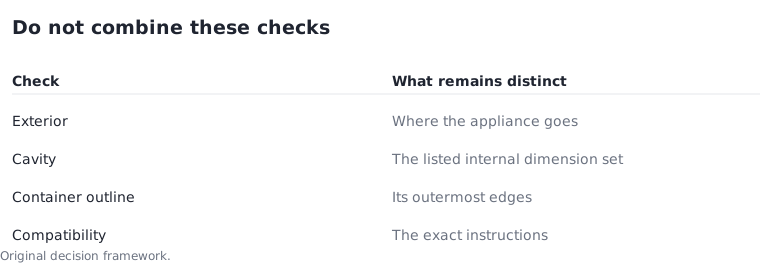
Separate exterior size, overall cavity dimensions and the outline of the item you want to use.
Updated:
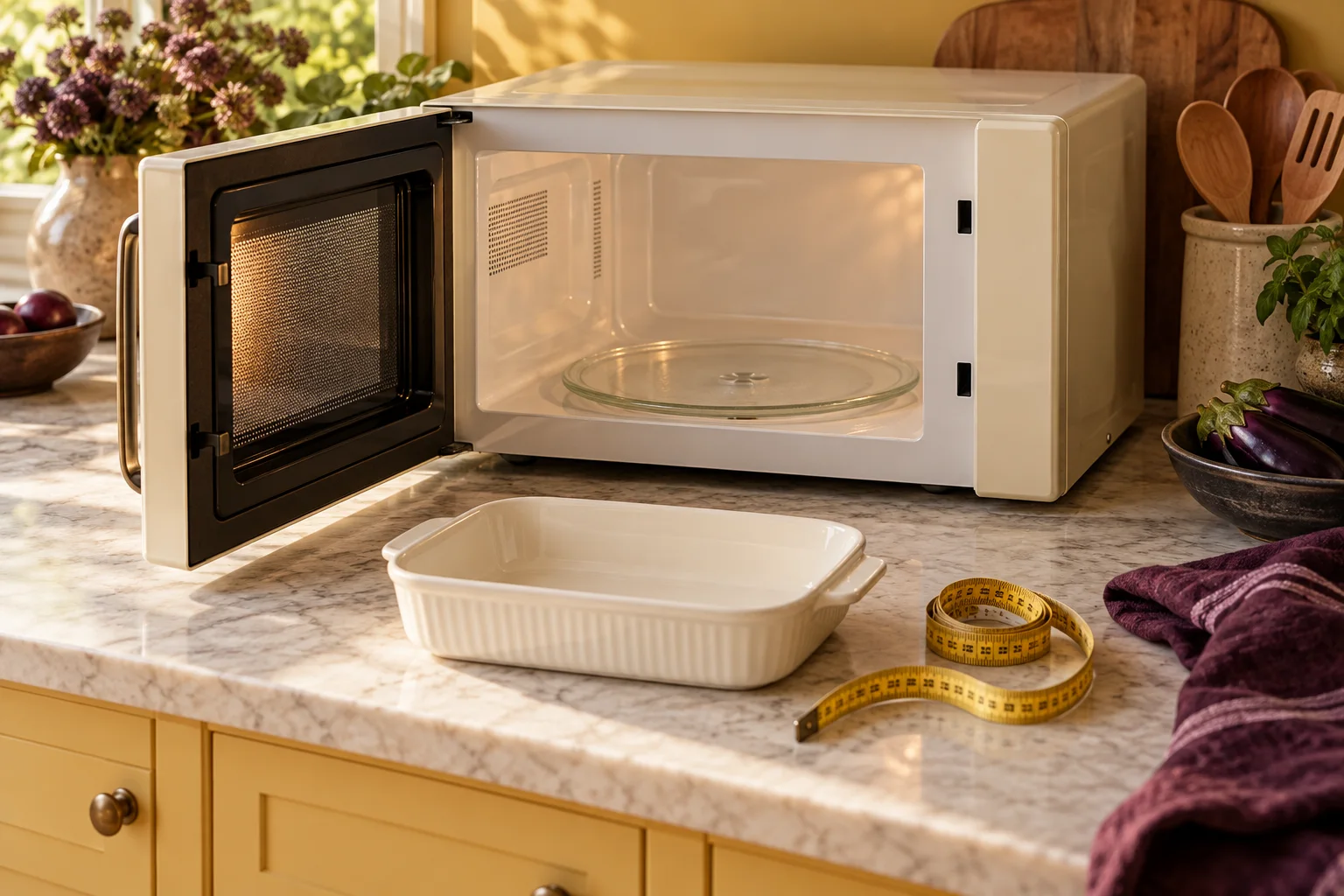
Begin with the correct dimension set
Panasonic's NN-ST45KW/ST46KB/ST48KS manual lists approximate overall cavity dimensions of 355mm wide, 365mm deep and 251mm high. Those are distinct from the appliance's exterior dimensions. Preserve both the order and the word approximate when noting them; a width and depth swap can change the question you think you have answered.
A cavity rectangle is a starting point, not proof that a particular container can be used. Door access, internal shape, permitted materials and the model's handling requirements remain separate checks. Do not interpret a headline litre capacity as a complete set of usable container dimensions.
Panasonic NN-ST45KW/ST46KB/ST48KS operating instructions F0003CA22BP ?
Include the rim and handles in your outline
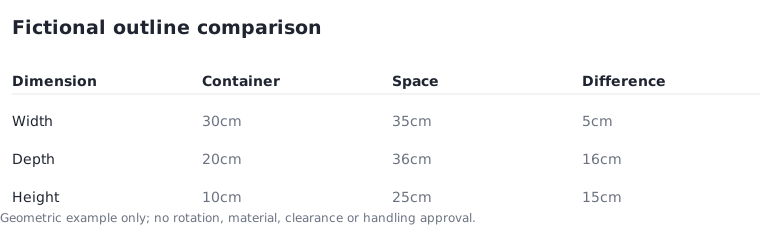
Suppose a fictional container measures 30cm by 20cm around its outermost edges and stands 10cm high. Suppose your fictional measured rectangular space is 35cm by 36cm by 25cm. The simple differences are 5cm in width, 16cm in depth and 15cm in height. These are the default inputs of our outline-fit tool.
They are geometric differences, not manufacturer-approved clearances. The tool does not assess rotation, material, a lid, steam or safe handling. If you measured only the base while the rim or handles project beyond it, the entered outline does not describe the entire item and the result can mislead.
Consider orientation without claiming approval
A rectangular outline may fit when turned through a right angle even though it does not fit as initially drawn. That can be useful to notice on paper, but it does not establish that the appliance's door, internal components or operating requirements allow that arrangement. Keep the rotation result labelled as a geometry observation.
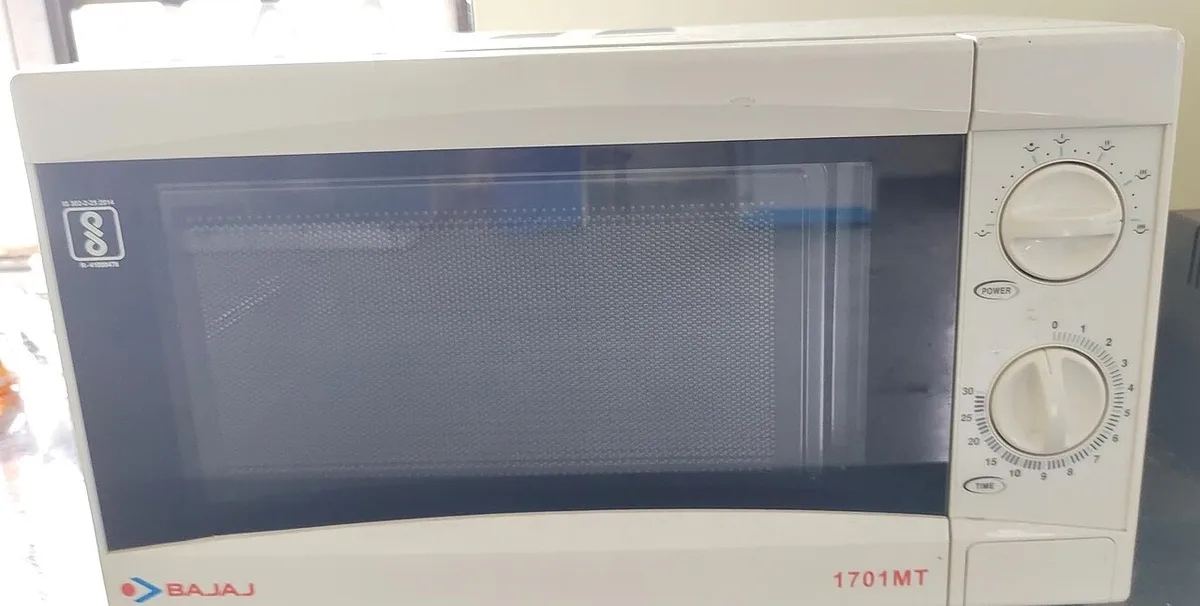
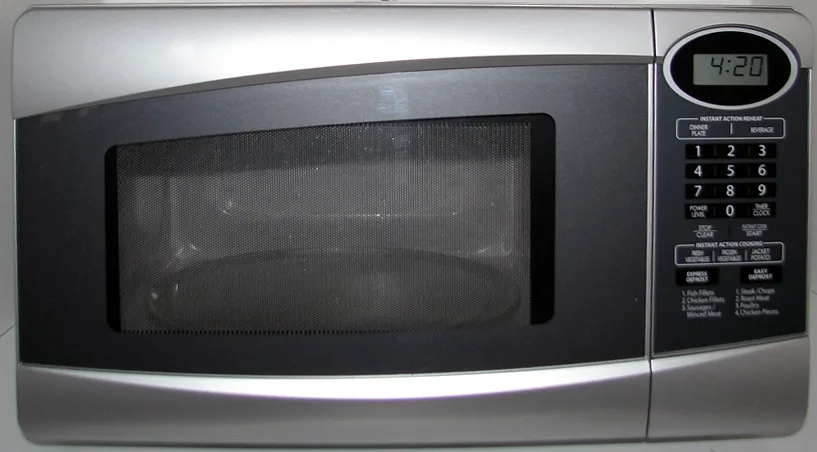
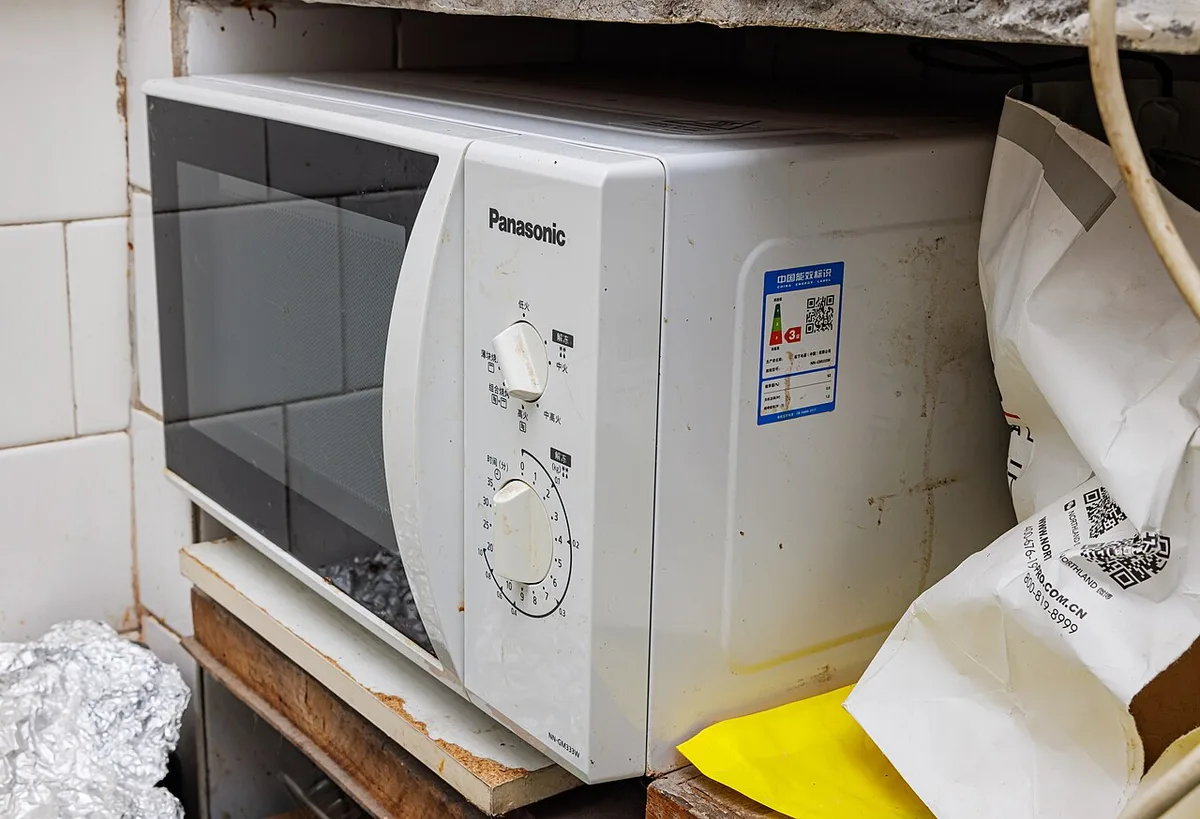
The historical exterior photographs show why a closed front view cannot answer this question. They do not reveal the full internal shape or provide a trustworthy scale. Avoid estimating cavity dimensions from the width of a photographed button or from another appliance that looks similar.
Keep material and physical fit in separate records
An item fitting inside a drawn rectangle does not make it a permitted microwave container. Record the exact item's intended use and the relevant manufacturer instructions separately. Do not transfer an accessory approval from a conventional oven or an air fryer into a microwave comparison.
If the container identity is unclear, resolve that before treating the size result as useful. A shortlist can show physical outline checked and compatibility unresolved at the same time. That is more honest than a single fits label that appears to settle every question when it only reflects three measurements.
Ask for the missing measurement precisely
When contacting a supplier, explain which part of the usable space you need to confirm and provide the full candidate model. Include the outer container dimensions and describe any protruding handles. Ask whether a quoted measurement refers to the overall cavity, an opening or another specific boundary.
Save the answer with its date and source. Revisit the sketch if the intended container changes, even if its advertised capacity seems similar. The aim is not to squeeze the largest possible object into a published box. It is to establish whether the item you actually intend to use is compatible and manageable under the correct instructions.