Do not substitute rim diameter for induction base size
A product’s nominal size can answer a different question from the diameter required by a hob zone.
Updated:
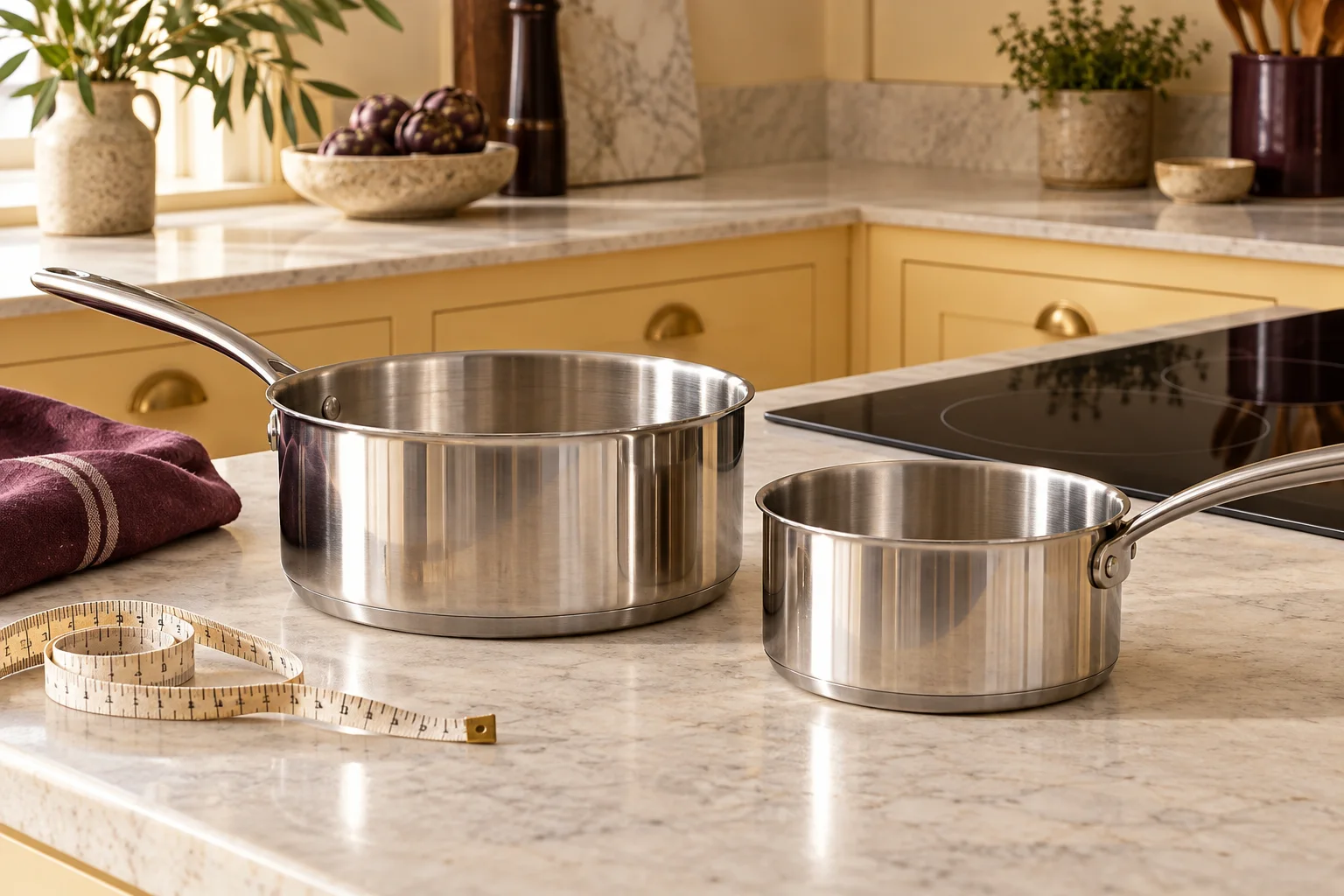
Find the model-specific diameter requirement
AEG's induction cookware guidance directs readers to the hob instructions for minimum and maximum pan diameters. That is an important boundary: a general cookware page does not establish one universal size range for every induction hob. Keep the exact model and the relevant zone beside the requirement you record.
Then identify what the cookware supplier has measured. A rim diameter, a base diameter and an overall width including handles describe different boundaries. If the listing does not say which one it uses, do not assume that the headline size is the figure needed for the zone comparison.
AEG: cookware suitable for induction ?
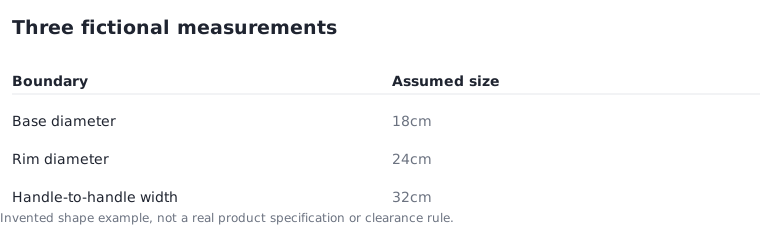
Label every boundary on a paper sketch
Imagine a fictional pan with an 18cm base, a 24cm rim and an overall handle-to-handle width of 32cm. These are three different measurements of the same invented item. The rim is 6cm wider than the base, while the overall outline is 8cm wider than the rim. None of those differences is an approved hob clearance.
This sketch makes a common information gap visible without claiming anything about a real product. The base measurement belongs in the compatibility question; the overall outline may matter to neighbouring controls and objects. A single number cannot conveniently stand in for both.
Do not measure a product from its photograph
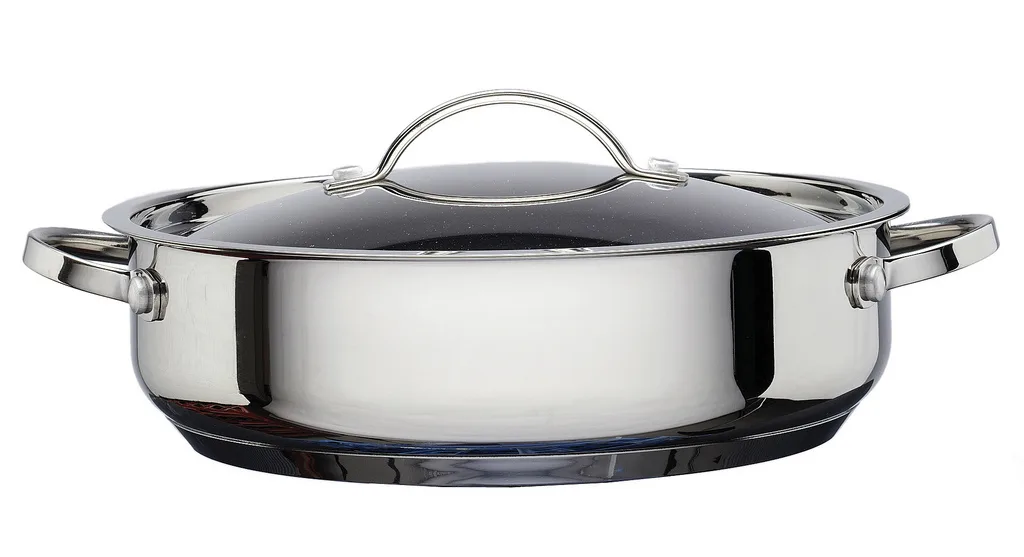
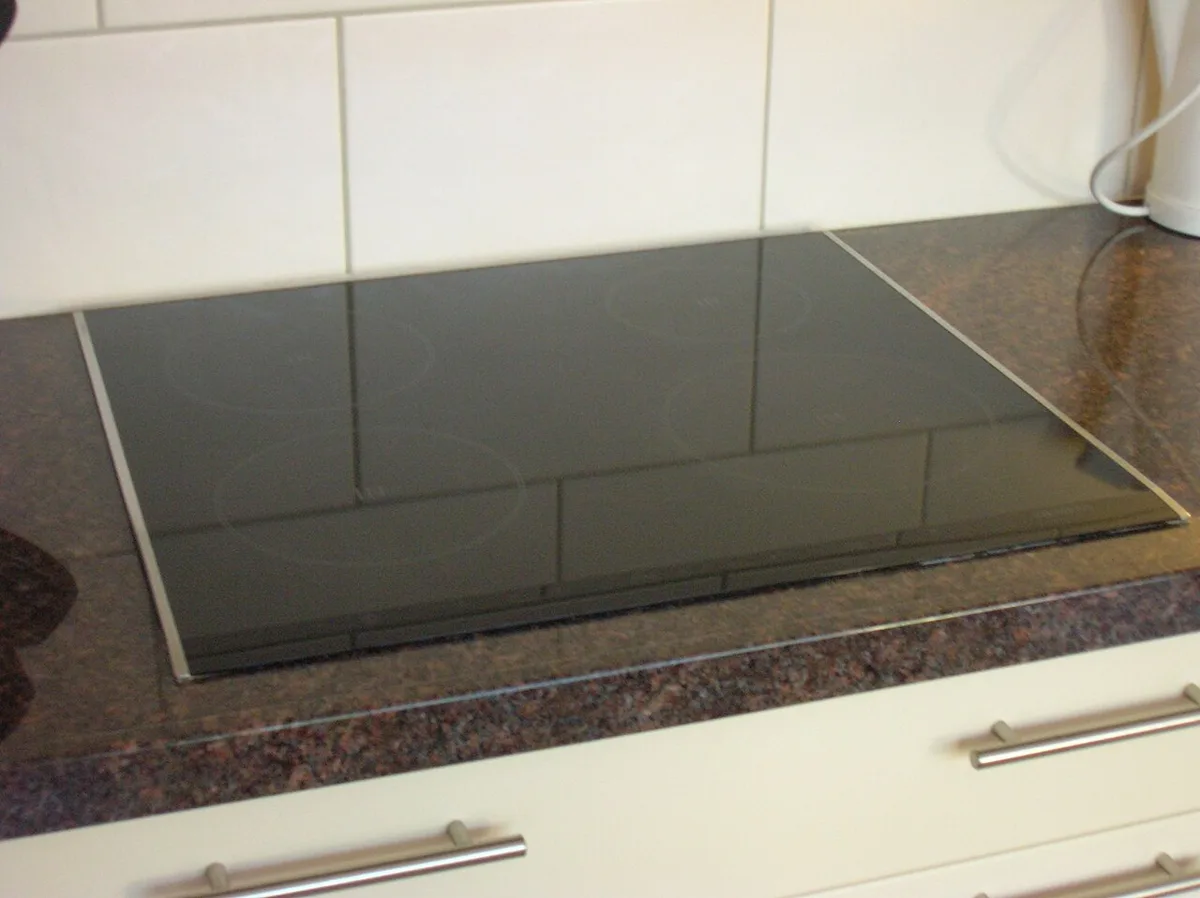
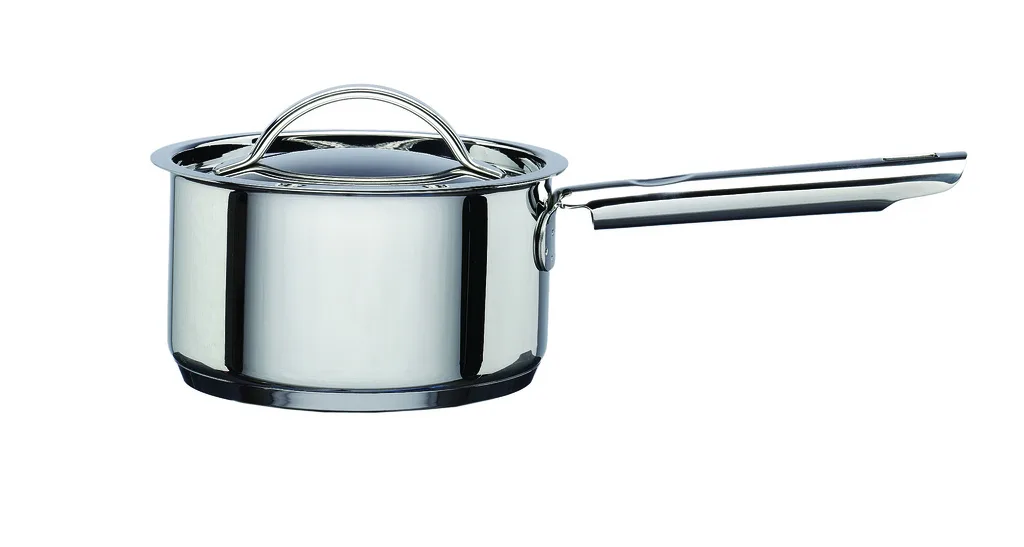
The two historical cookware photographs show why shapes differ. A long saucepan handle projects well beyond the round body, while the shallow pan's side handles expand its overall width. The perspective and unknown photographic setup prevent those images from serving as a reliable measuring scale.
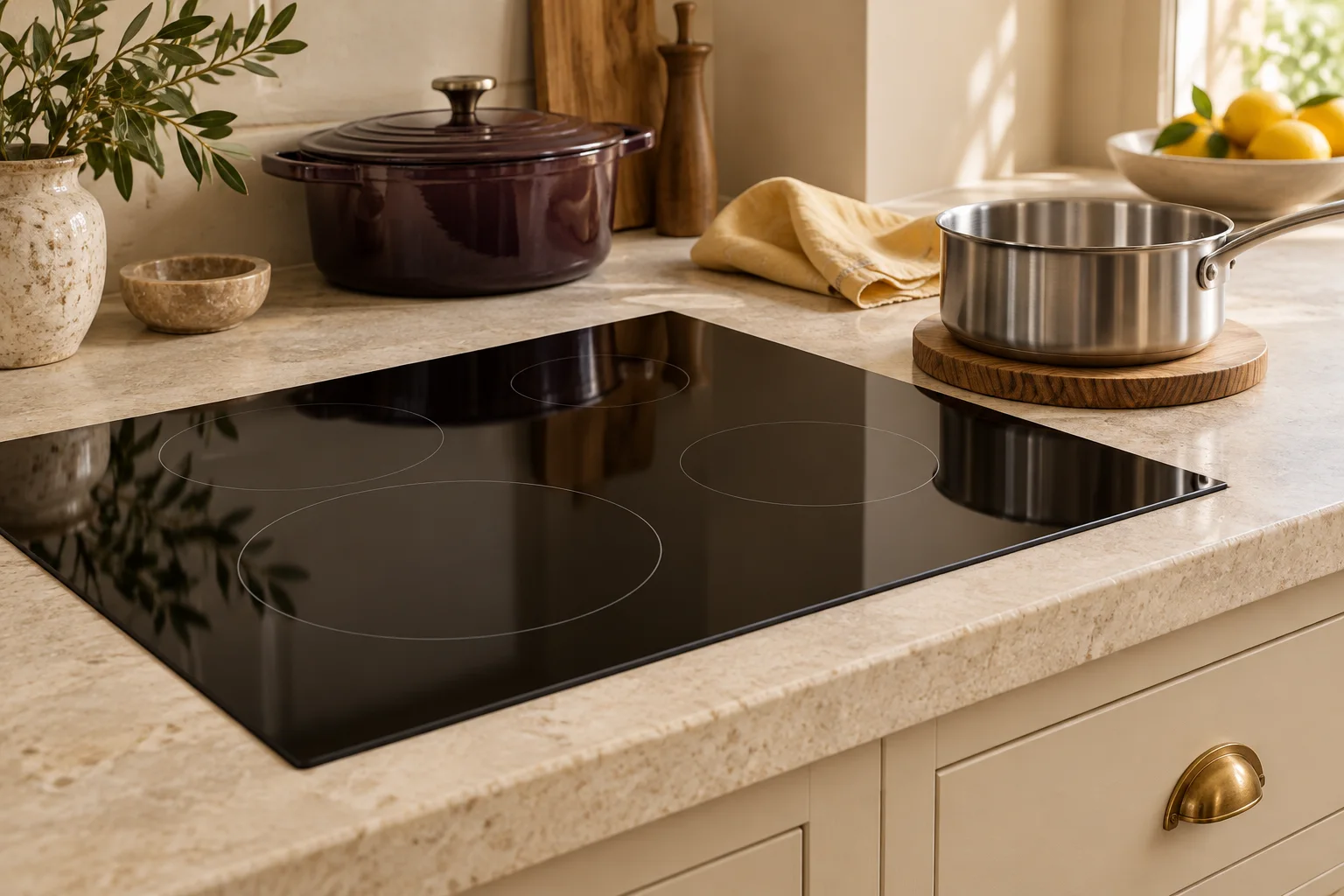
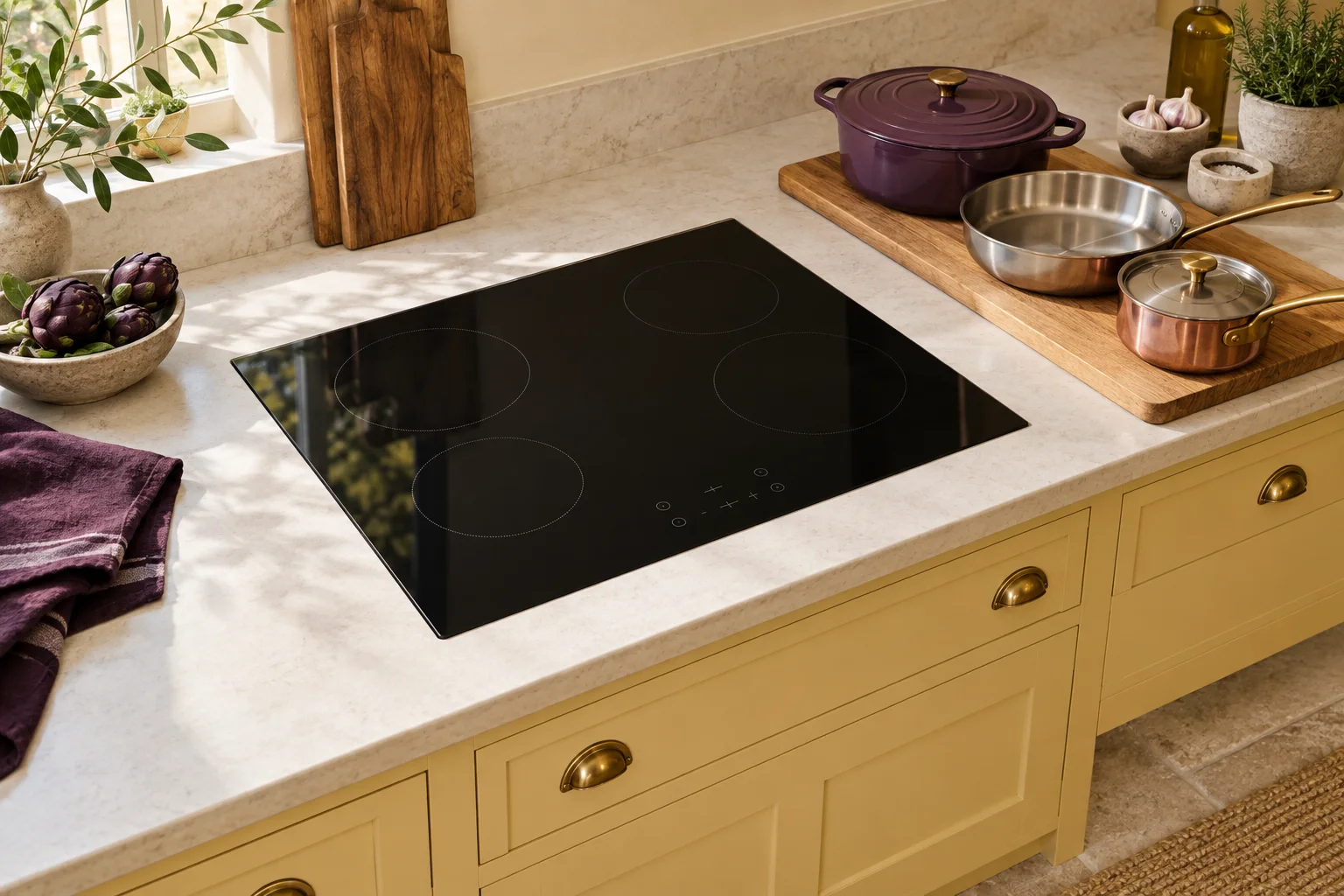
The empty hob photograph similarly shows a layout rather than a dimensioned technical drawing. Use a product's official specifications or a clearly identified measurement of your own cool, unused item where appropriate. Keep the source of the number in the record so that someone reviewing it can see what was actually established.
Preserve the difference between a limit and a measurement
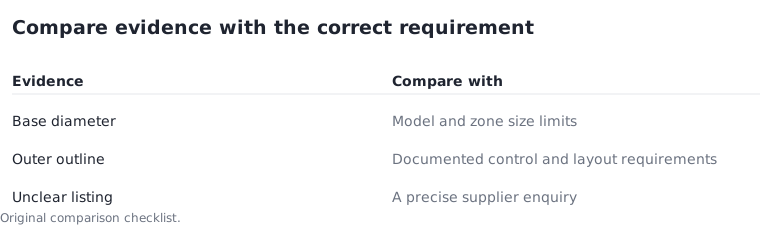
A minimum or maximum in a hob manual is a requirement for the stated model and context. A pan measurement is evidence about the item you want to use. Write them in separate columns before comparing them. That helps prevent a minimum from being mistaken for a recommended pan size or a retailer dimension from becoming an installation rule.
If the manual describes different zones or operating arrangements, preserve that distinction. Do not average several limits into a single convenient range. Ask the manufacturer about the intended combination if the available documents do not answer the question clearly.
Make a shortlist that exposes uncertainty
A useful comparison can show base diameter confirmed, rim diameter confirmed and zone requirement unresolved. That is more informative than a general fits label. Add the relevant source link, model identifier and the date of any support answer. Update the record when the cookware or proposed hob changes.
This guide does not rank cooking results or claim that a larger pan performs better. We have not conducted heating tests. The practical outcome is a better-defined compatibility enquiry and a clearer view of whether the cookware you intend to use matches the documented requirements of the particular hob.