Include the pan rim and handles in a hob layout check
A compatible base does not settle whether a larger outer outline interferes with controls.
Updated:
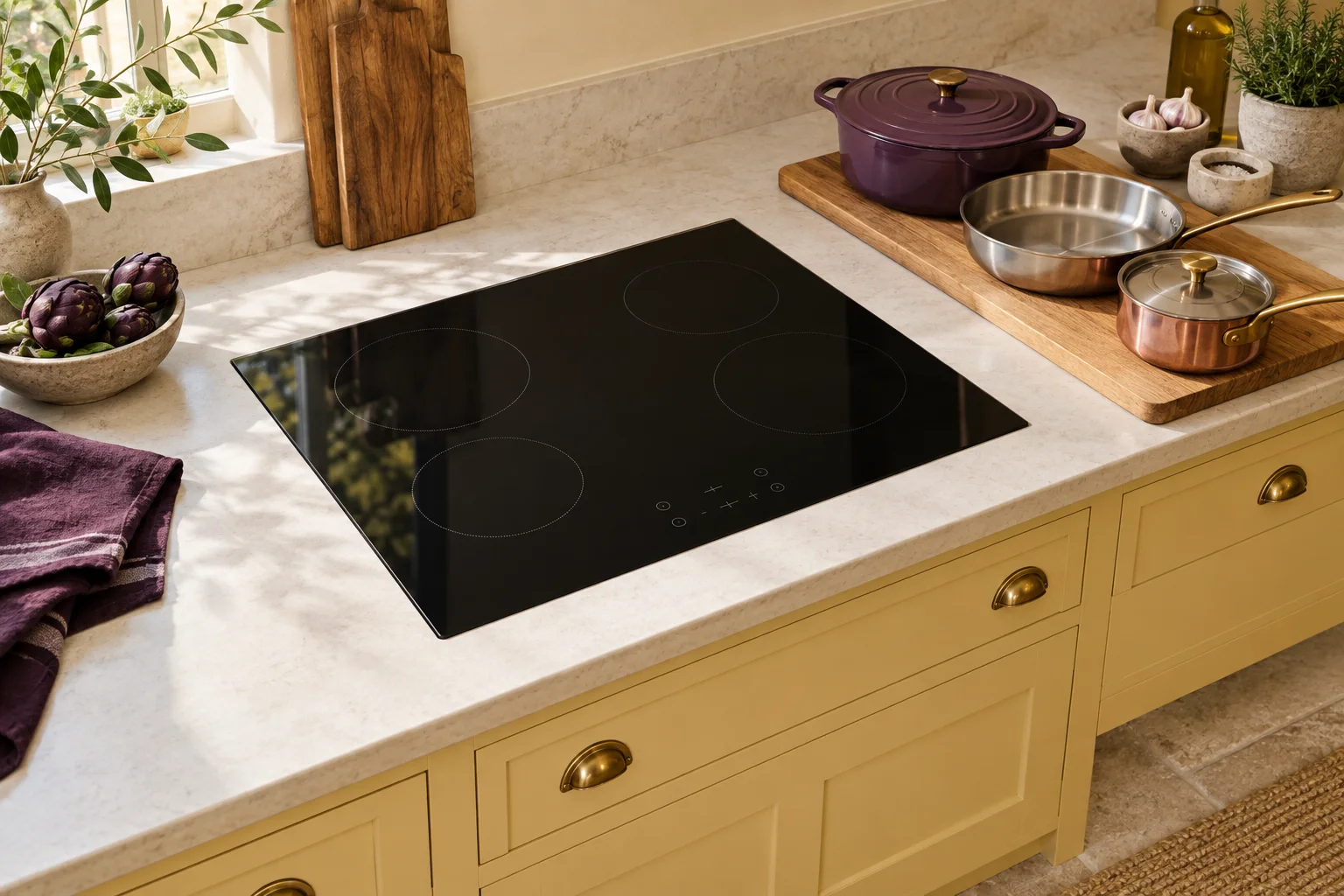
Keep the control area in the comparison
AEG's cookware guidance cautions against oversized pans near the controls and notes that a top rim larger than the base can interfere with them. This makes the upper outline relevant even after a base-material or diameter question has been answered. Consult the exact hob instructions rather than inventing a universal clearance.
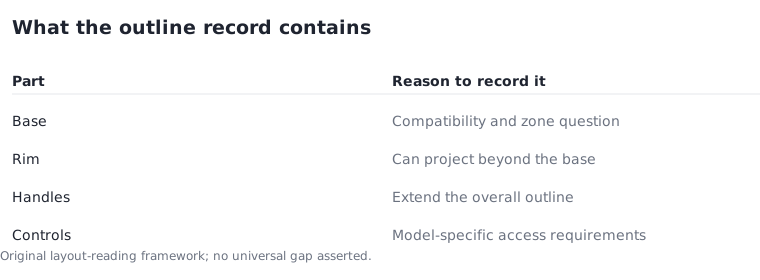
Begin a layout record with the zone, control area and the actual cookware outline. Keep handles visible in the sketch. A successful base-size check does not automatically establish that the complete pan can be positioned as intended without conflicting with the model's operating requirements.
AEG: cookware suitable for induction ?
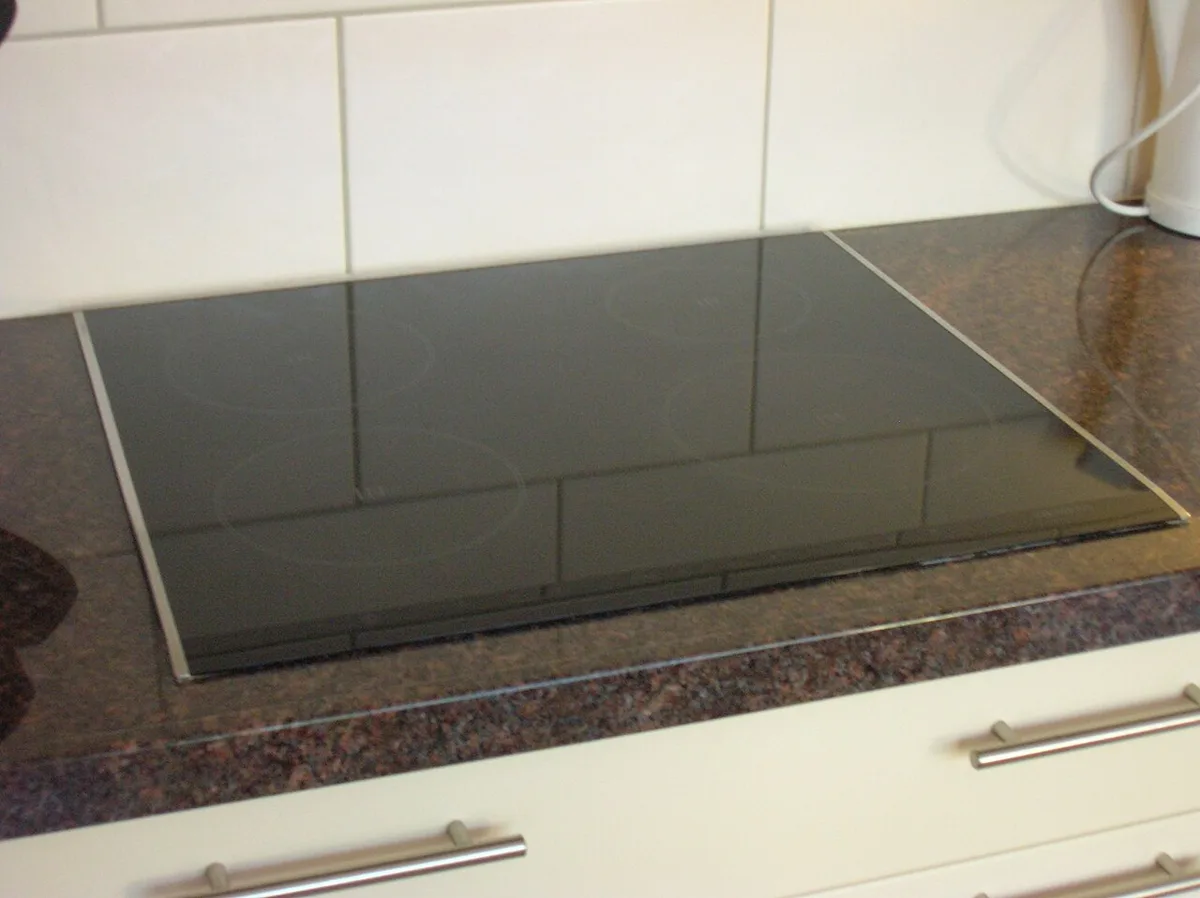
Use an outline example without calling it a safe gap
Suppose an invented round base is 18cm across and its upper rim is 26cm across. The radius difference is 4cm on each side when both circles share the same centre. That arithmetic explains why the upper edge can reach farther than the base even before a handle is considered.
It is not a recommendation to leave a 4cm clearance or a measurement of the photographed pans. Actual shapes may not be concentric, and handles create their own outline. Keep the example as a way to understand the geometry, then retrieve the real product dimensions and the relevant requirements.
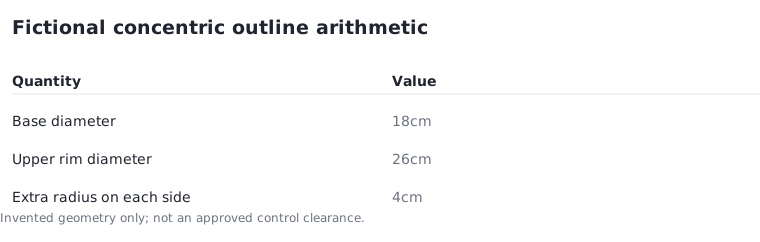
Read the photographs as shape references
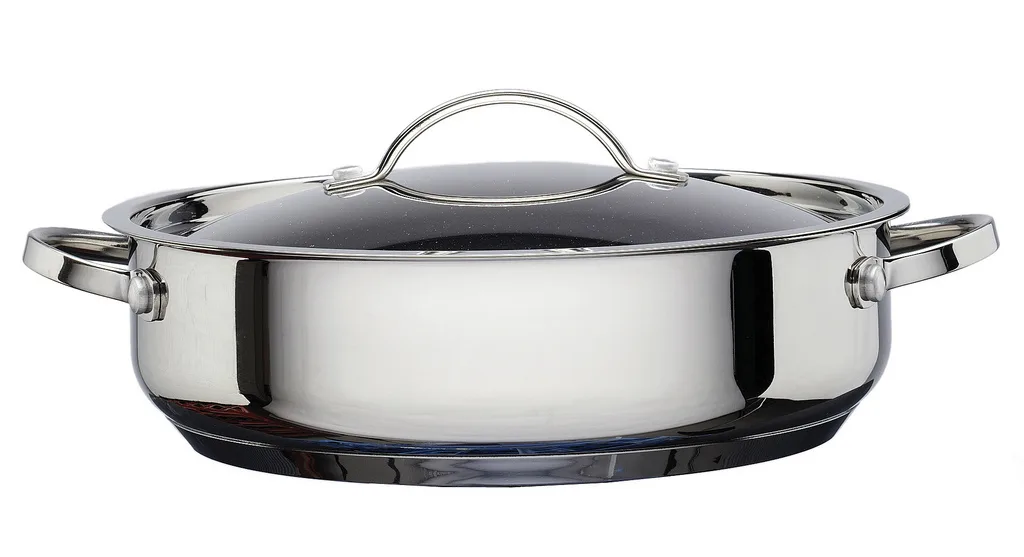
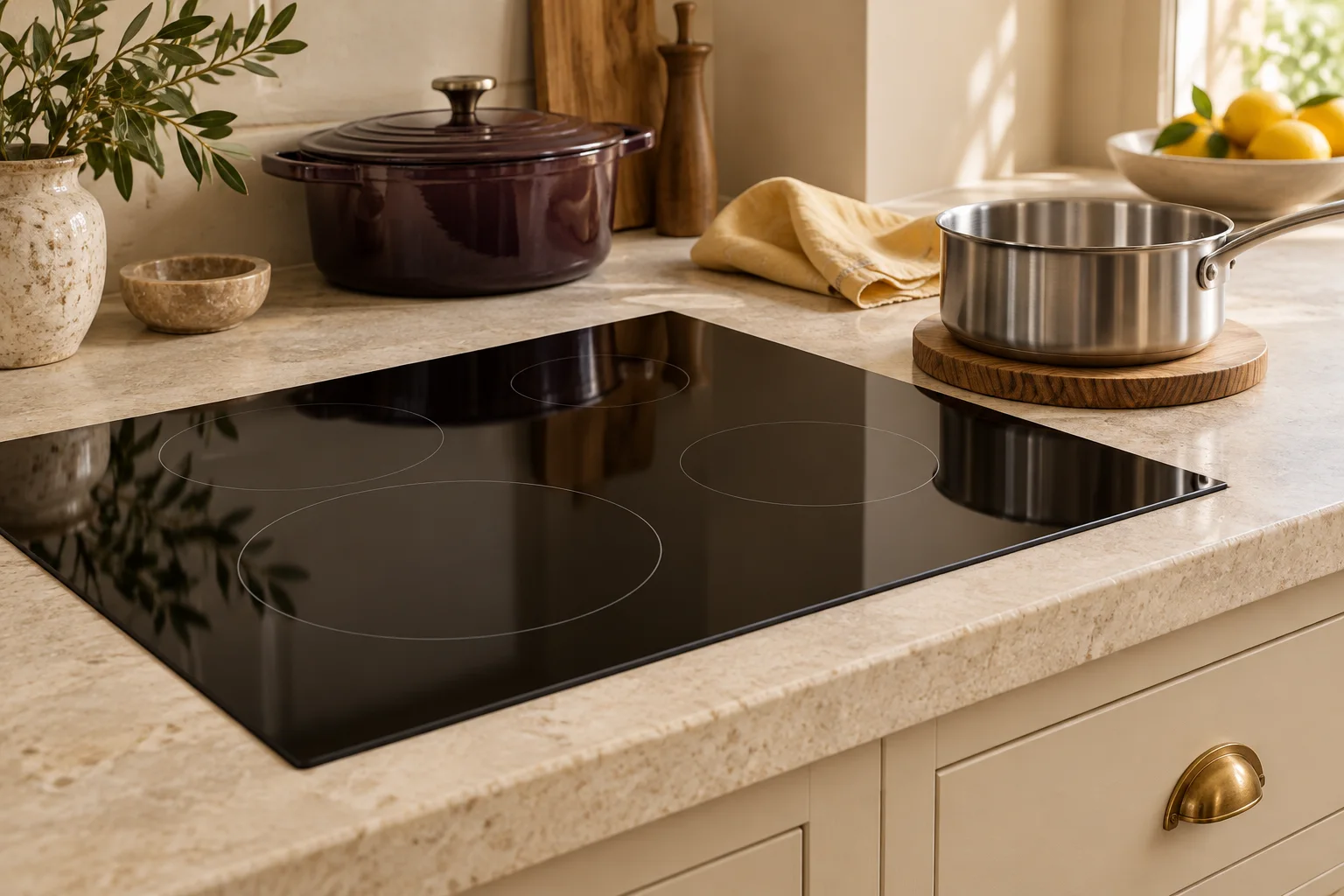
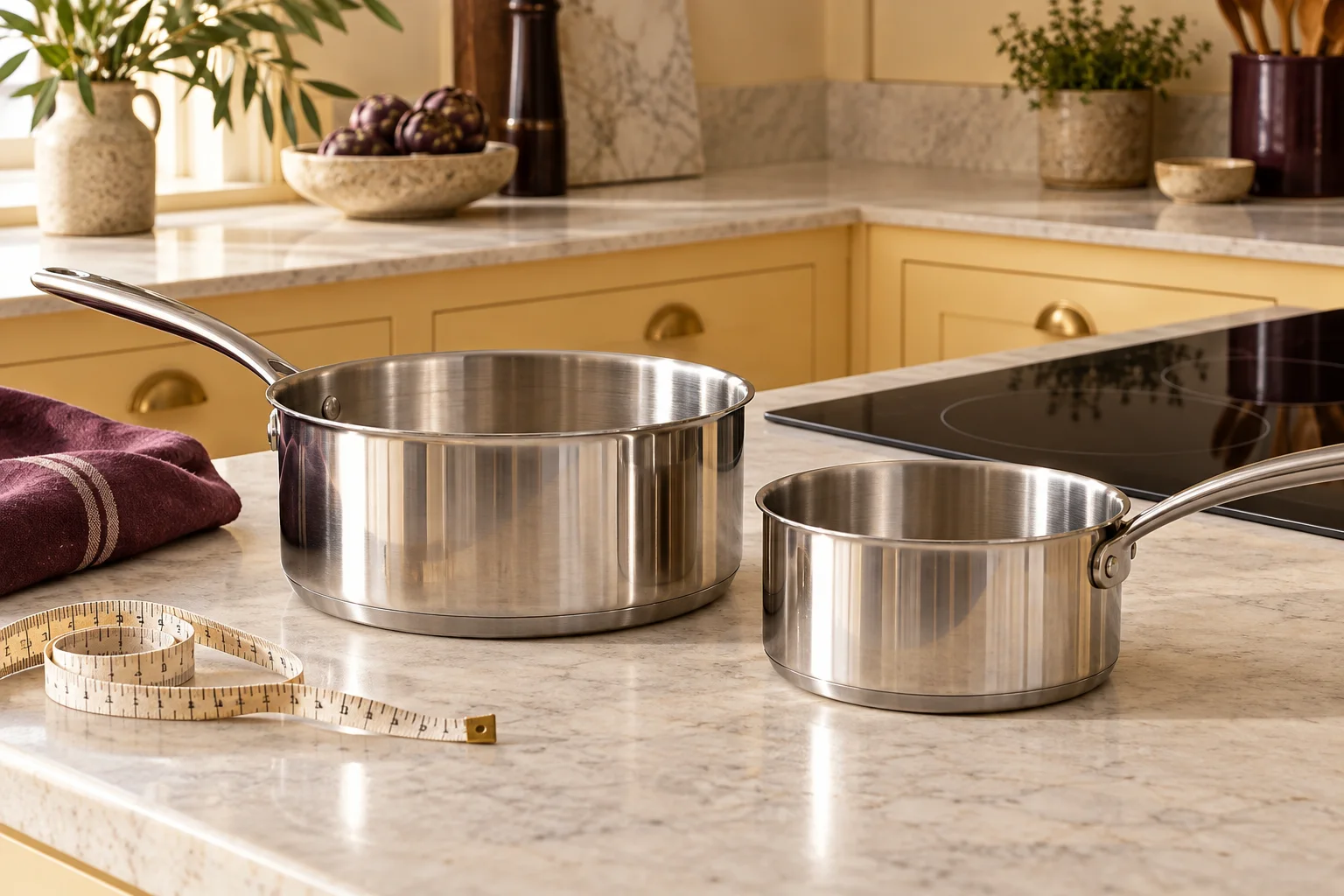
The lidded saucepan has a long projecting handle, while the shallow pan has two side handles. Those are visibly different outer shapes. Neither photograph tells you how the item relates to the controls of your hob. The empty hob image provides another layout, but it cannot establish the instructions for a different model.
Do not use image perspective to decide that a particular gap is adequate. A photograph may make an object seem farther from a control than it is, and the relevant boundary may be hidden. A measured sketch and the correct documentation provide more useful evidence than a visual impression alone.
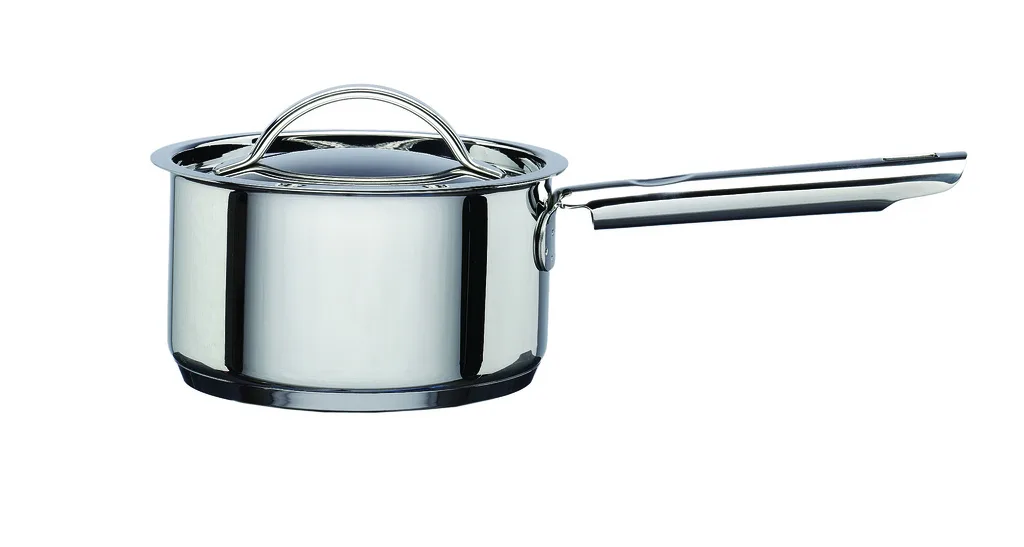
Check the complete intended arrangement
If your routine involves more than one item, keep each outline in the planning sketch rather than considering every pan in isolation. This is a way to identify questions, not an invitation to test an unsupported arrangement. Follow the manufacturer's guidance on suitable cookware and control access for the exact hob.
Record any uncertainty about handles, the rim or the intended zone. Do not solve a conflict by guessing that the control can tolerate being covered or by moving an item into an undocumented position. Ask for clarification before treating the arrangement as feasible.
Preserve the unanswered part of the decision
A shortlist can legitimately say that the base appears compatible while the control-area question remains unresolved. Keep those outcomes separate. Add the exact pan identity, relevant dimensions and a link to the source of the hob requirement. This makes a support enquiry specific enough to produce a useful answer.
We have not tested the photographed products or assessed their layout on a particular hob. The practical benefit is a complete outline check that includes the parts a base-only comparison misses. Once the official requirements and real dimensions are available, revisit the whole arrangement before committing to the cookware or appliance.