Check the pan base before comparing induction cookware
Material compatibility, base dimensions and the hob’s requirements are separate checks.
Updated:
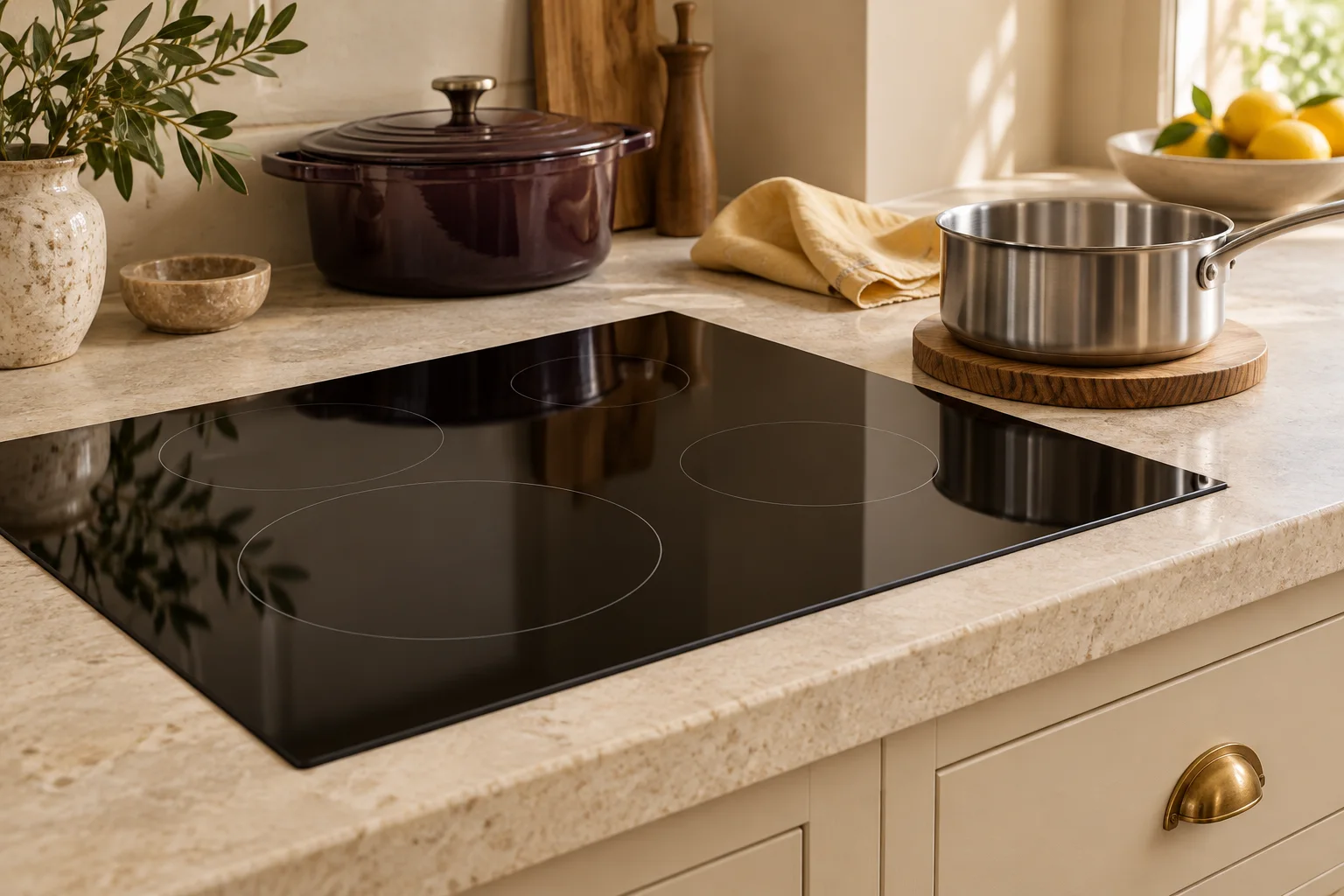
Start with the surface that meets the hob
AEG's induction guidance describes checking whether a magnet adheres strongly to the cookware base and consulting the hob manual for the suitable diameter range. Bosch likewise explains that suitable cookware needs a ferromagnetic base. These are starting points for reading the requirements, not a universal approval of a pan based on its appearance.
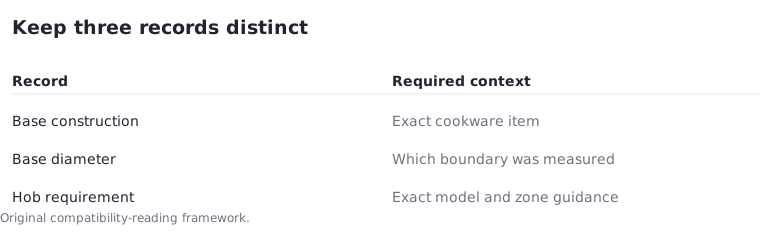
Record the exact cookware item and the hob model together. A description of the upper body material does not always describe the construction of its base. Do not dismiss or approve a whole material category from a photograph when the relevant question concerns the particular base construction and the manufacturer's instructions.
AEG: cookware suitable for induction ? Bosch UK: suitable induction cookware ?
Keep the base and the rim in separate fields
For a fictional example, imagine a pan with a 16cm base and a 20cm upper rim. The two diameters differ by 4cm. This difference is an observation about an invented shape, not a claim that the pan is compatible with a particular hob or zone. The larger upper number should not replace the base measurement in your notes.
If a product listing gives only one diameter, ask which boundary it describes. A nominal pan size may not resolve the exact question you are trying to answer. Keep an unknown base size marked unknown rather than assuming that it equals the visible rim.

Use the side profile to identify the question
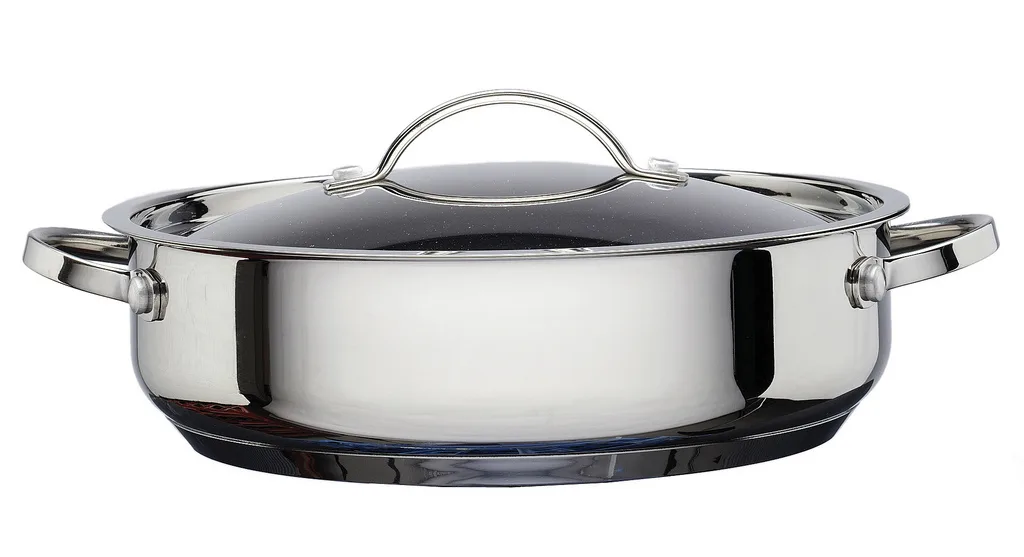
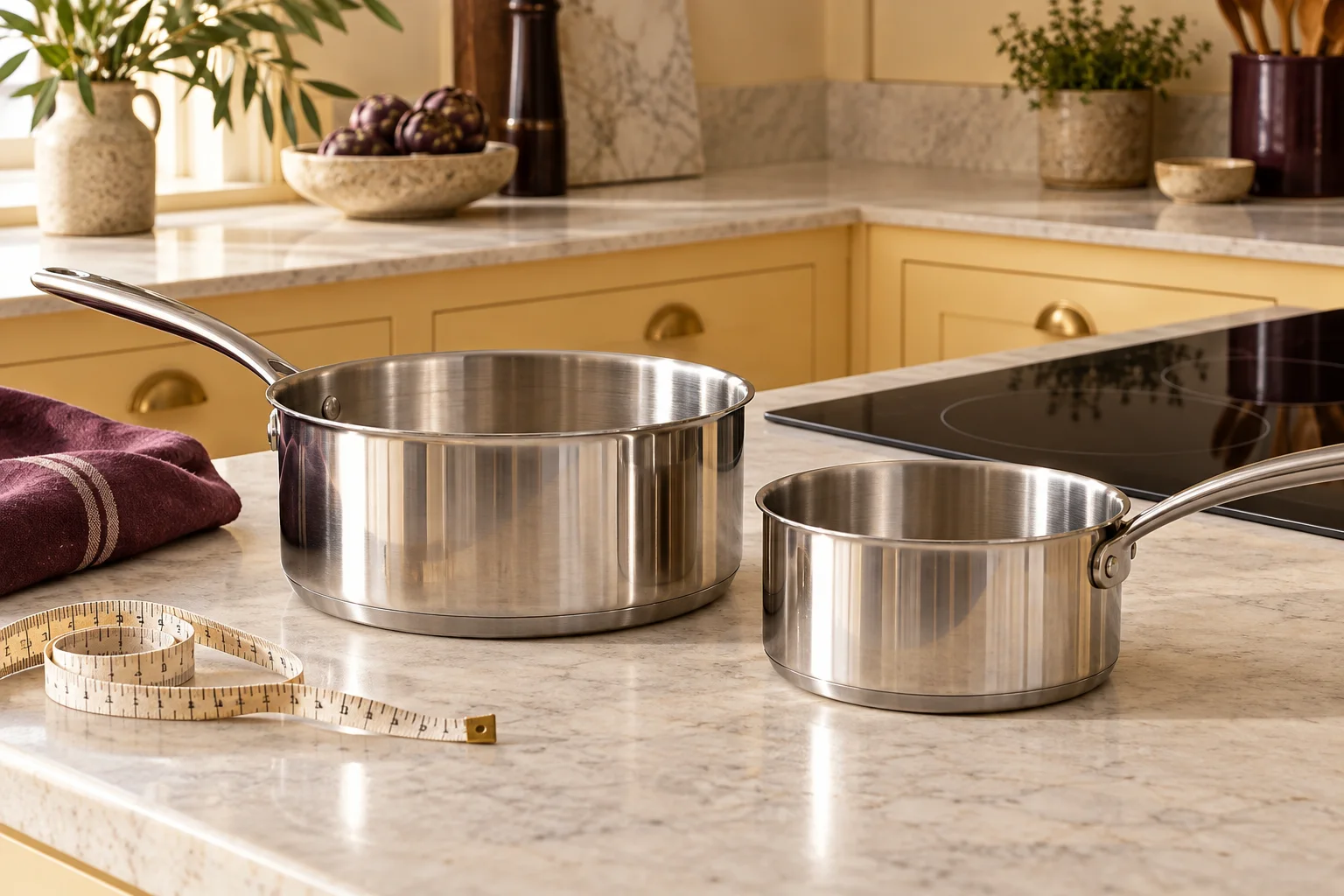
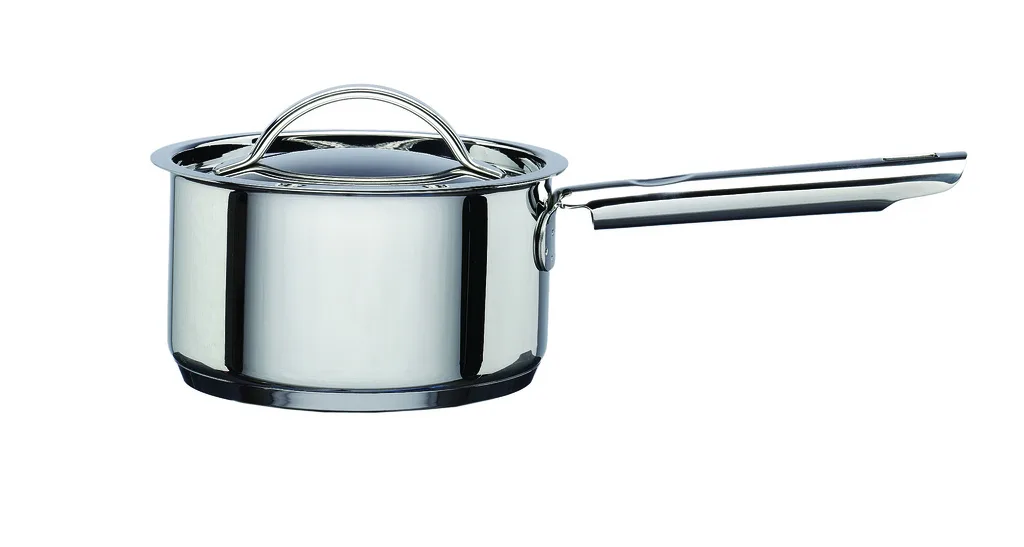
The saucepan photograph makes the distinction between the bottom, upper body and long handle visible. The shallow pan shows another outline with side handles. Neither image supplies a trustworthy scale or proves that your own item has the same construction. Use the pictures to recognise which dimensions and parts need separate attention.
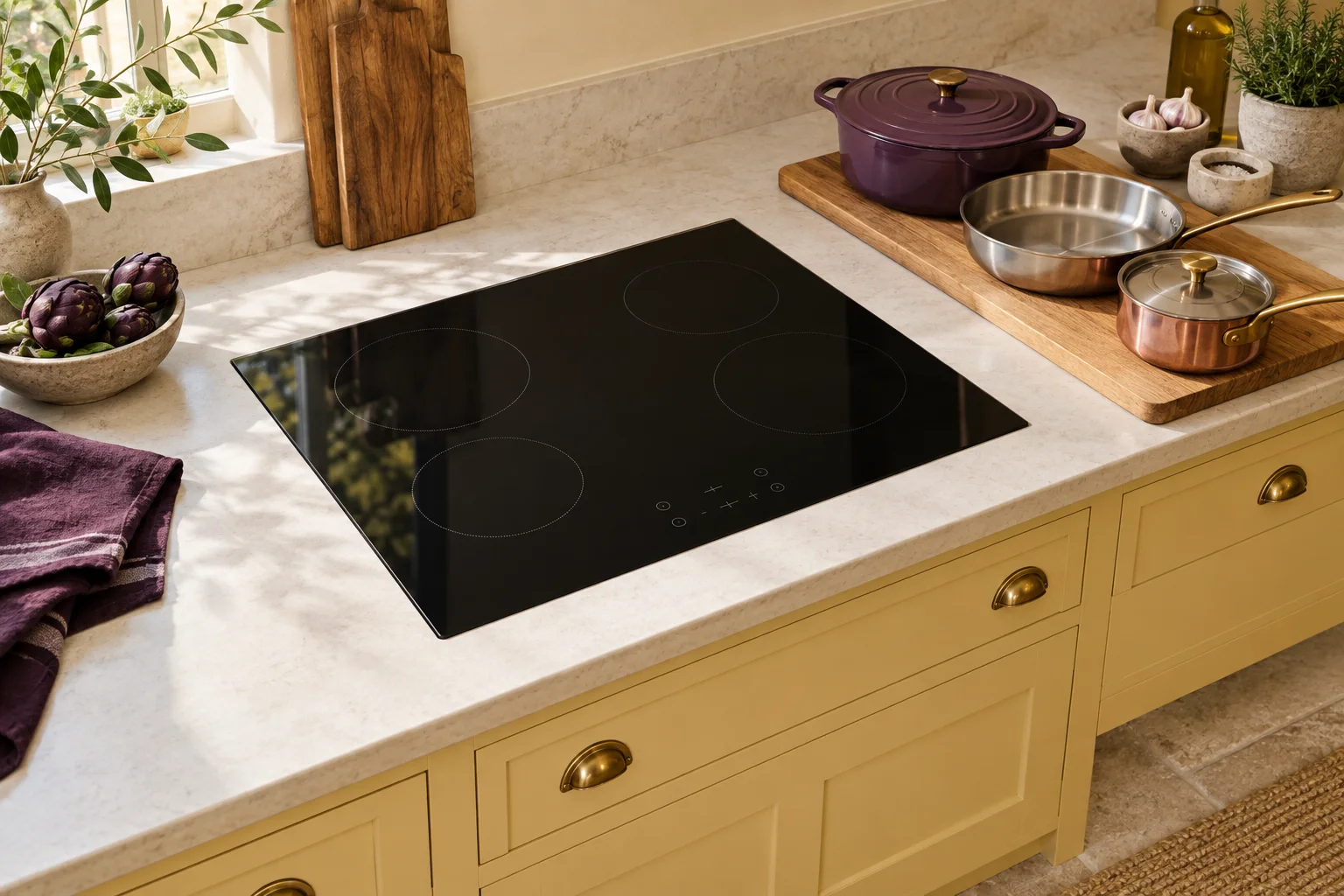
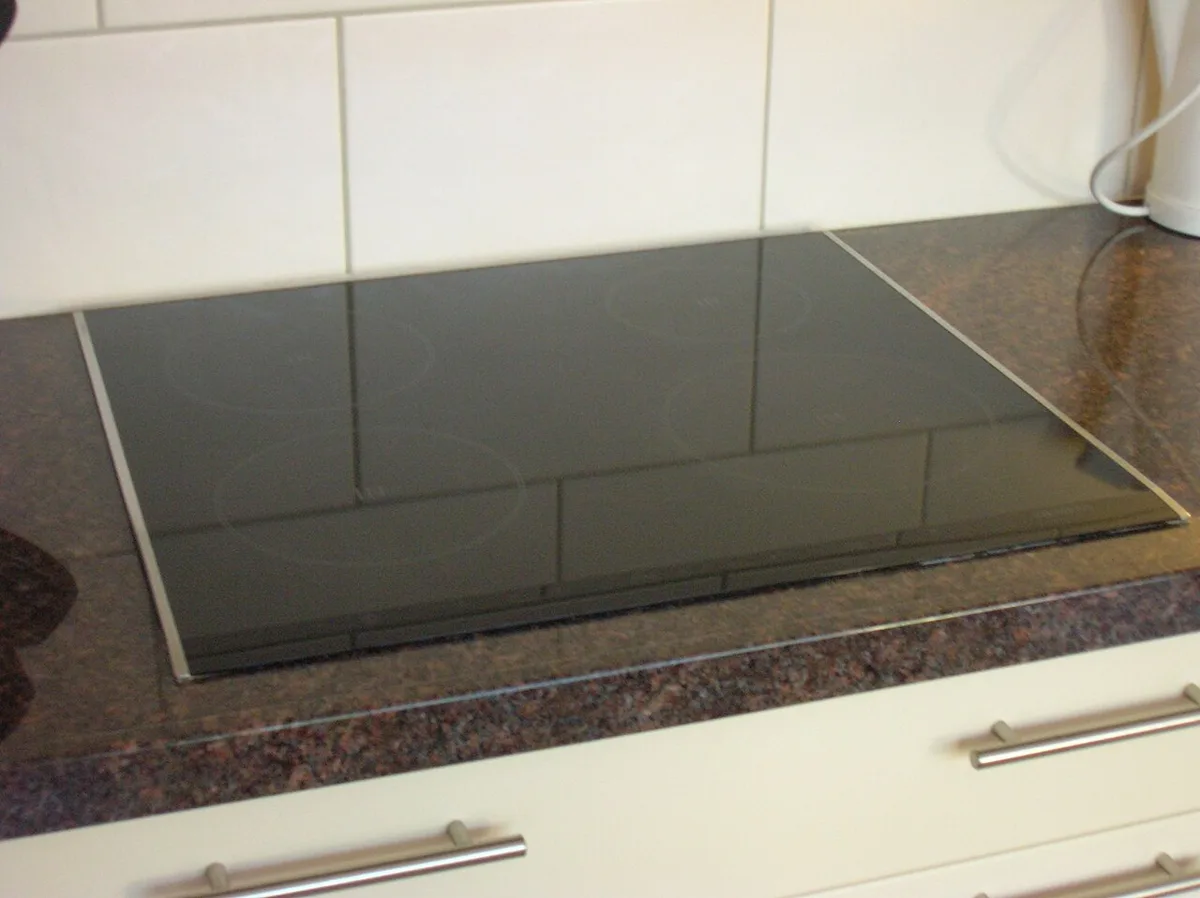
The hob photograph adds a different piece of context: the surface layout belongs to a particular installation. It does not tell you the accepted pan range of a candidate hob. A complete compatibility record needs the documentation for the actual equipment you intend to combine.
Avoid turning one check into every answer
Even when a material question is resolved, other requirements may remain. The base size, shape, condition and the model's instructions should remain visible in your record. Do not treat a magnetic response as permission to ignore the rest of the cookware or hob guidance, and do not perform improvised heating experiments to fill a missing specification.
A useful enquiry names both products and asks about the precise unresolved condition. Keep any response with its scope and date. If the manufacturer identifies a limitation, preserve it rather than shortening the answer to compatible in a way that hides important conditions.
Compare the cookware you actually own
Before budgeting for replacements, make an inventory of the items relevant to your routine. Record the source of each known base specification and distinguish an observed feature from a confirmed compatibility statement. This can reveal a smaller, more specific information gap than replacing an entire set because the pans look different from a retailer's illustration.
We have not tested the photographed cookware or measured its performance on any hob. The purpose of the exercise is to connect the correct evidence to the correct item. Once the material, dimensions and model requirements are clear, you can decide what still needs confirming before making a purchase.