Match a cleaning instruction to the exact part
A removable drawer, a crisper plate and the main unit do not necessarily share the same care instructions.
Updated:
Identify the part before reading the care claim
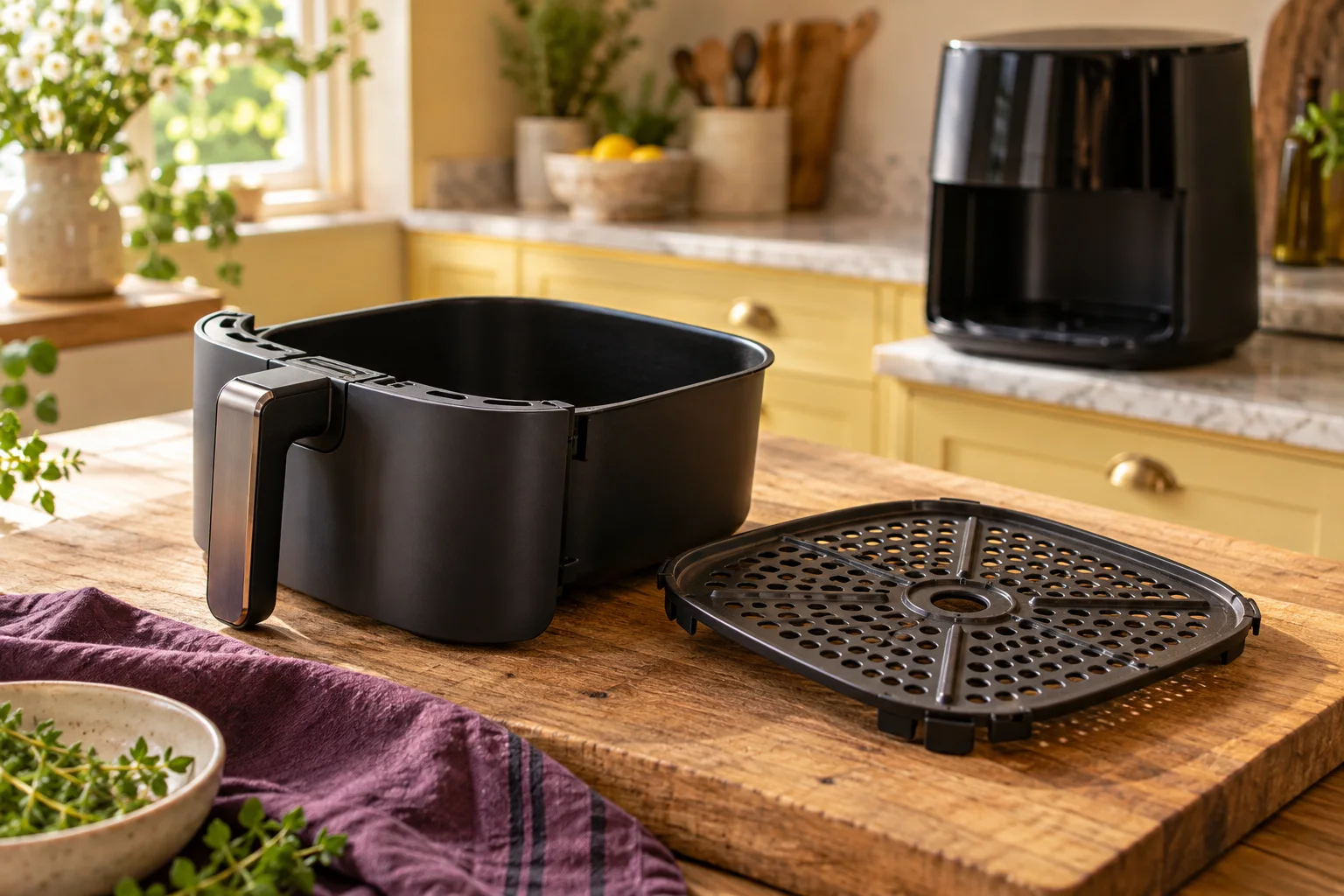
The AF400UK instructions distinguish the drawers and crisper plates from the main unit. They identify the removable drawers and plates as dishwasher-safe while recommending hand washing to help extend drawer life; the main unit is not dishwasher-safe. Keep that distinction attached to this model rather than turning it into a rule for every air fryer.
Start your record with the part name used in the exact manual. A retailer's phrase such as easy-clean accessories may not identify the component you are looking at. If you cannot confidently match the part to the documentation, ask the manufacturer before choosing a cleaning method.
Ninja AF400UK manufacturer instructions, Argos support copy ?
Create a simple ownership record
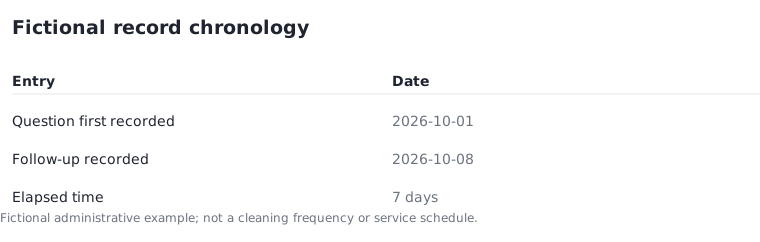
A fictional record could begin with a drawer noted on 2026-10-01 and a follow-up question logged on 2026-10-08, seven days later. Those dates are only an example of keeping an observation and its follow-up together. They do not establish a cleaning interval or a maintenance schedule.
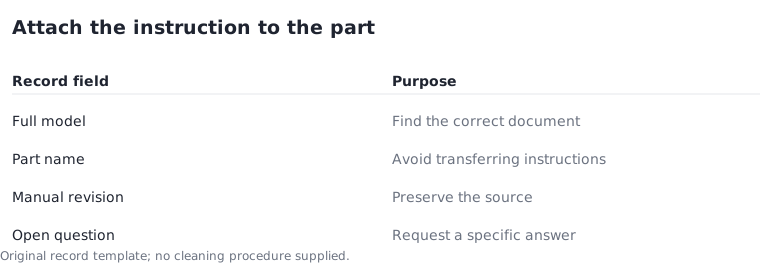
Include the model identifier, part name, manual revision and the unresolved question. A useful note might say that a removable insert has not yet been matched to the correct instructions. Avoid a generic tick box marked cleaned if that label hides which part was handled and which method was actually approved.
Do not turn an interior photograph into a procedure
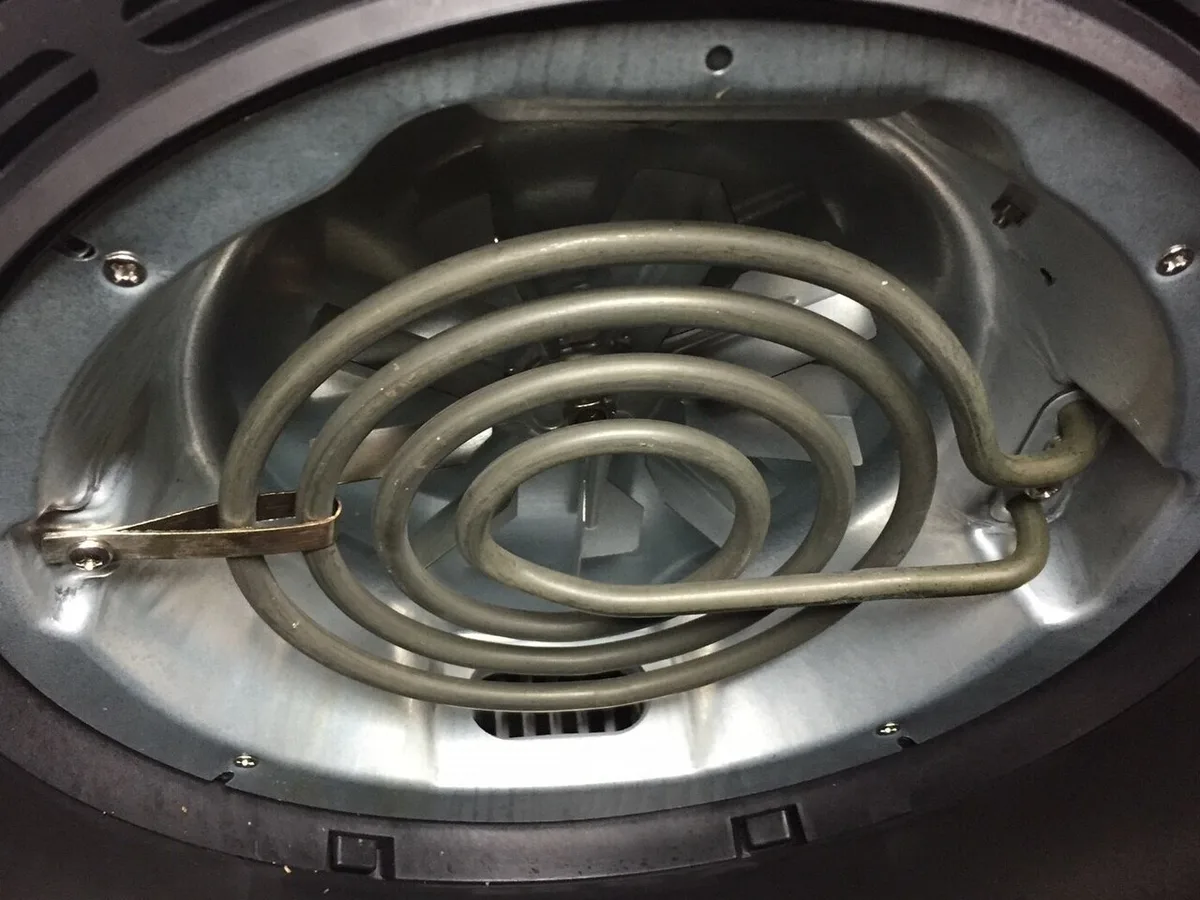
The close-up here shows a heating element and fan inside a historical appliance. It is included to distinguish the heating assembly from a removable food drawer. It is not permission to dismantle a product, reach into it, detach a component or apply a cleaning product. A photograph alone cannot supply the relevant precautions.
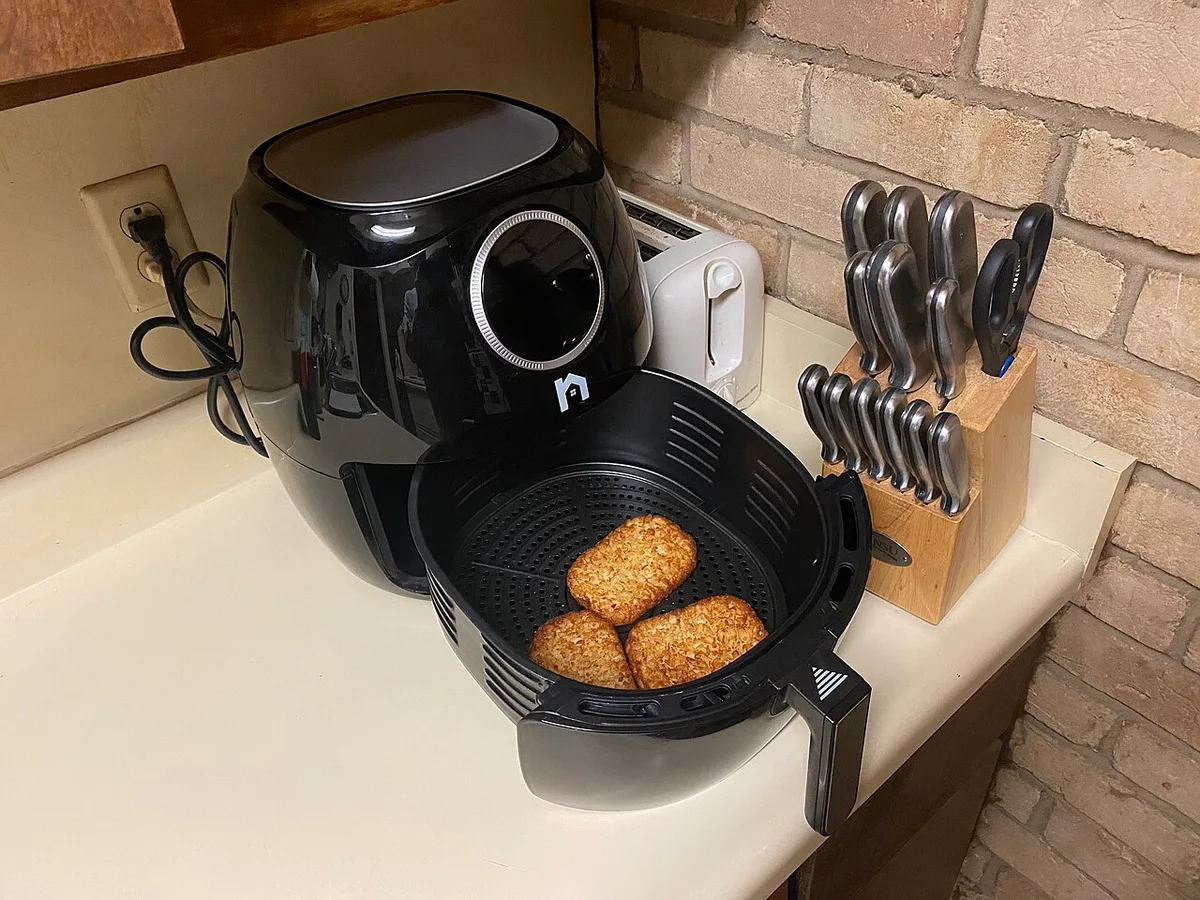
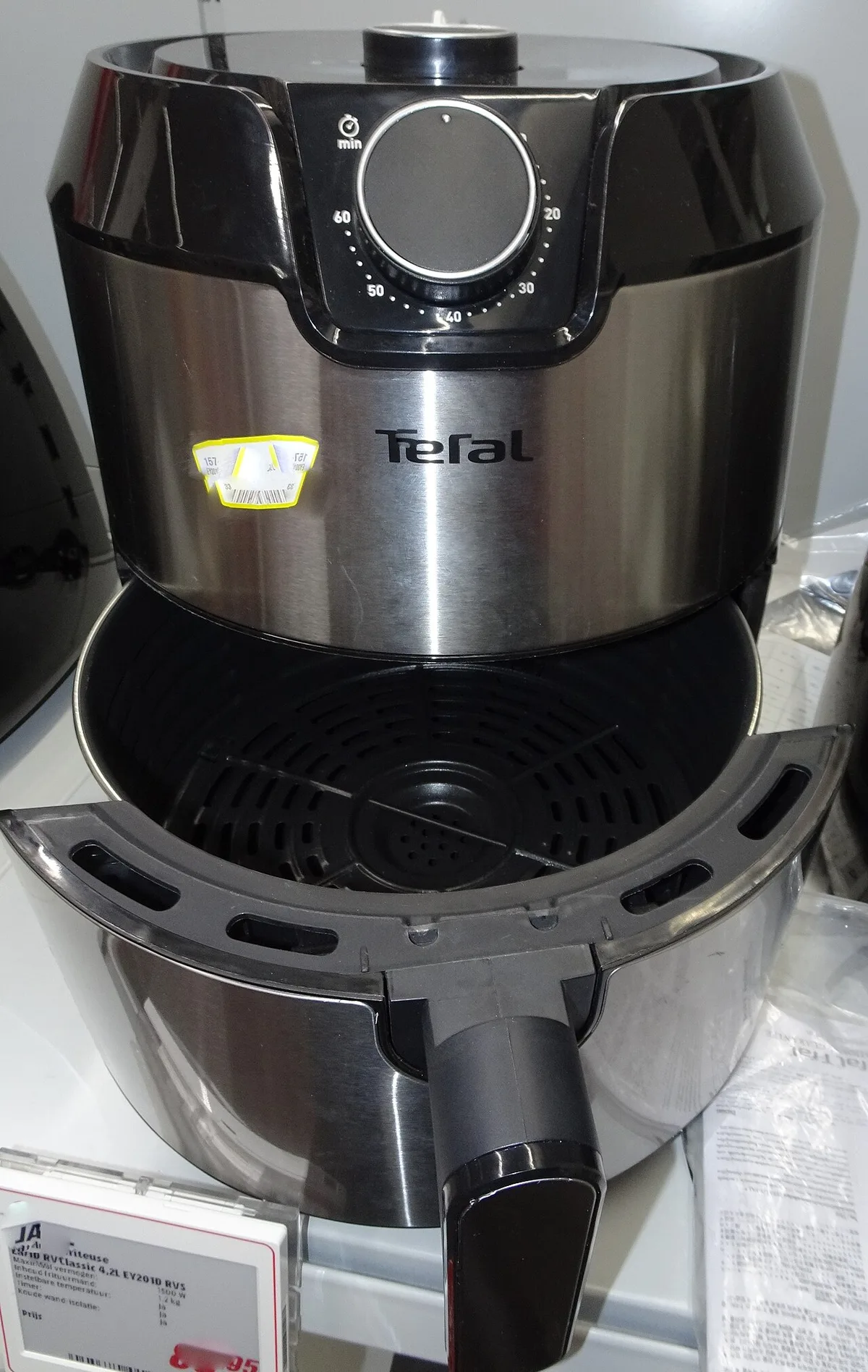
The open-basket photographs serve a different purpose: they show removable-looking assemblies and physical handles. Even then, appearance does not establish how a particular part should be removed or maintained. Follow the exact instructions and any cooling or disconnection requirements given there, rather than copying the pictured arrangement.
Separate a care question from a replacement question
A damaged, missing or unfamiliar part raises a compatibility question as well as a cleaning question. Keep the part identifier and appliance model together when requesting support. Do not substitute a similar-looking accessory merely because its outline seems to fit or because another owner describes using one.
Record the manufacturer's answer and the date it was received. If the response concerns a particular revision, preserve that limitation. This is especially useful when buying an appliance second-hand or when a household has more than one similar drawer or insert and the original paperwork has become separated.
Make the record useful for the next decision
A care record should help you find a source quickly, not encourage unnecessary handling. Store the correct manual link, the relevant section and the identity of the part. Keep observations factual: what is visible, what remains uncertain and who can answer it. Avoid diagnosing an internal fault from an exterior photograph.
At the next purchase, use this record to ask whether the documented routine suits your household. Do not claim that one design will last longer simply because a component is removable. We have not conducted durability testing. The useful outcome is a clearer distinction between an approved routine, a compatibility question and an issue requiring manufacturer support.