Keep the appliance and replacement-part identifiers together
A similar shape or familiar product family does not establish that a replacement part is compatible.
Updated:
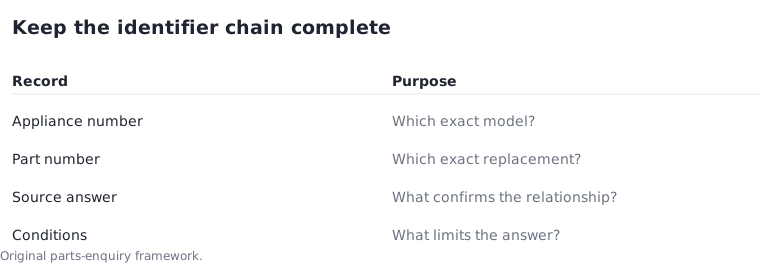
Begin with the full appliance identifier
Bosch's HBG7341.1 instructions tell accessory purchasers to quote the exact product number, or E number. Panasonic's cited manual likewise asks for the correct model number when ordering relevant spares and accessories. Keep that complete identifier rather than shortening it to a brand or product family.
Then record the proposed part identifier and the source that connects it to your appliance. A seller's generic compatible description may leave the exact variant unclear. If the relationship is not established, keep it unresolved before placing an order rather than relying on a photograph that looks familiar.
Bosch HBG7341.1 user manual, revision 9001681898_F ? Panasonic NN-ST45KW/ST46KB/ST48KS operating instructions F0003CA22BP ?
Use measurements as supporting evidence only
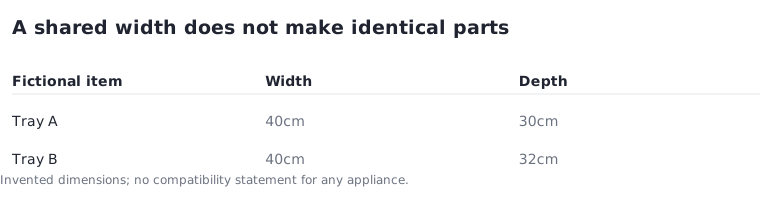
Suppose two fictional trays both have an outer width of 40cm. One is 30cm deep and the other 32cm deep. Even the shared width does not make them the same part; their depth differs by 2cm, and other physical details may differ as well. These invented dimensions illustrate the limitation of a single matching measurement.
Do not use this example to approve either tray for an oven. Dimensions can help describe the question you are asking, but they do not replace the manufacturer's compatibility information, support arrangement or complete accessory instructions.
Do not let an image stand in for an identifier
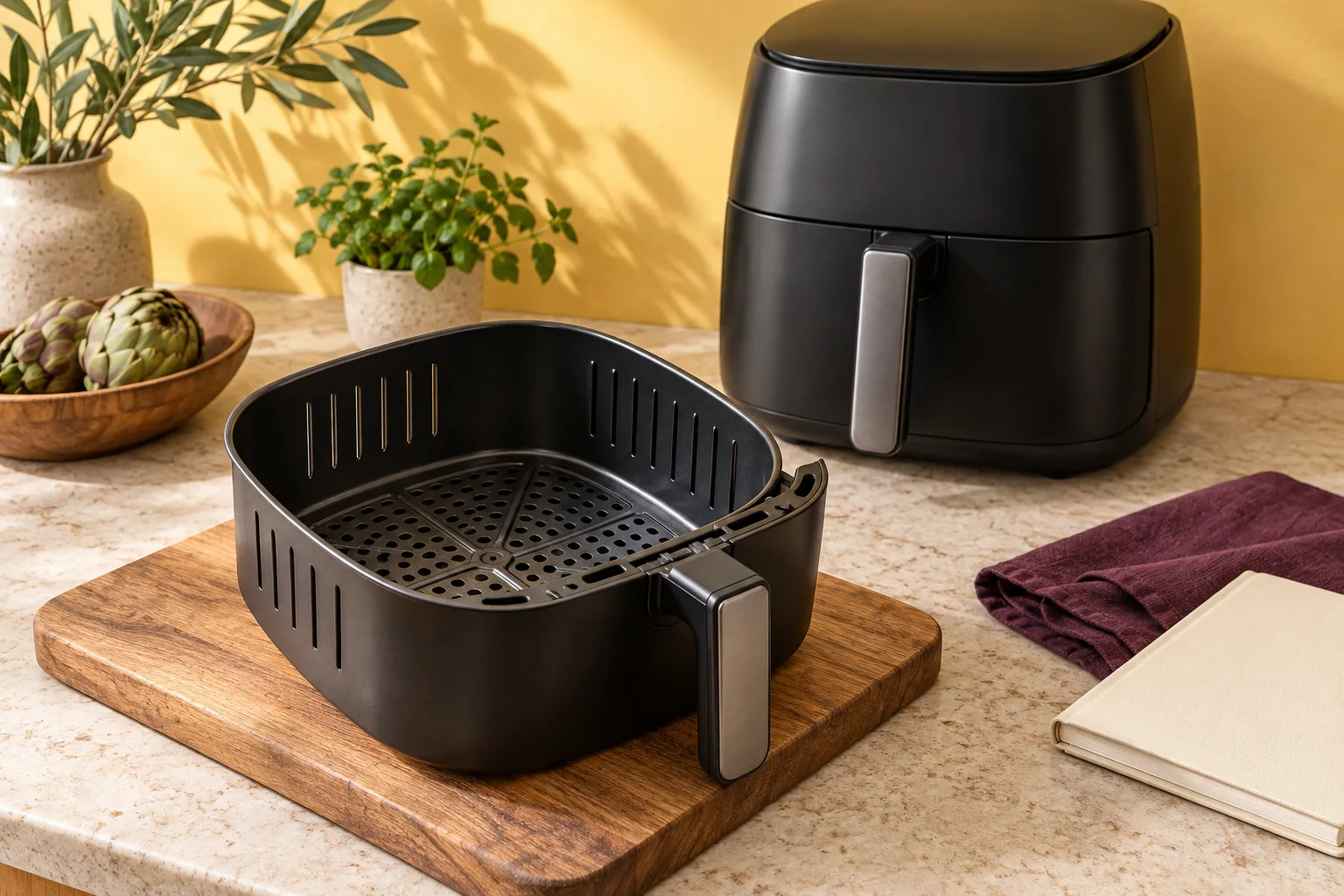
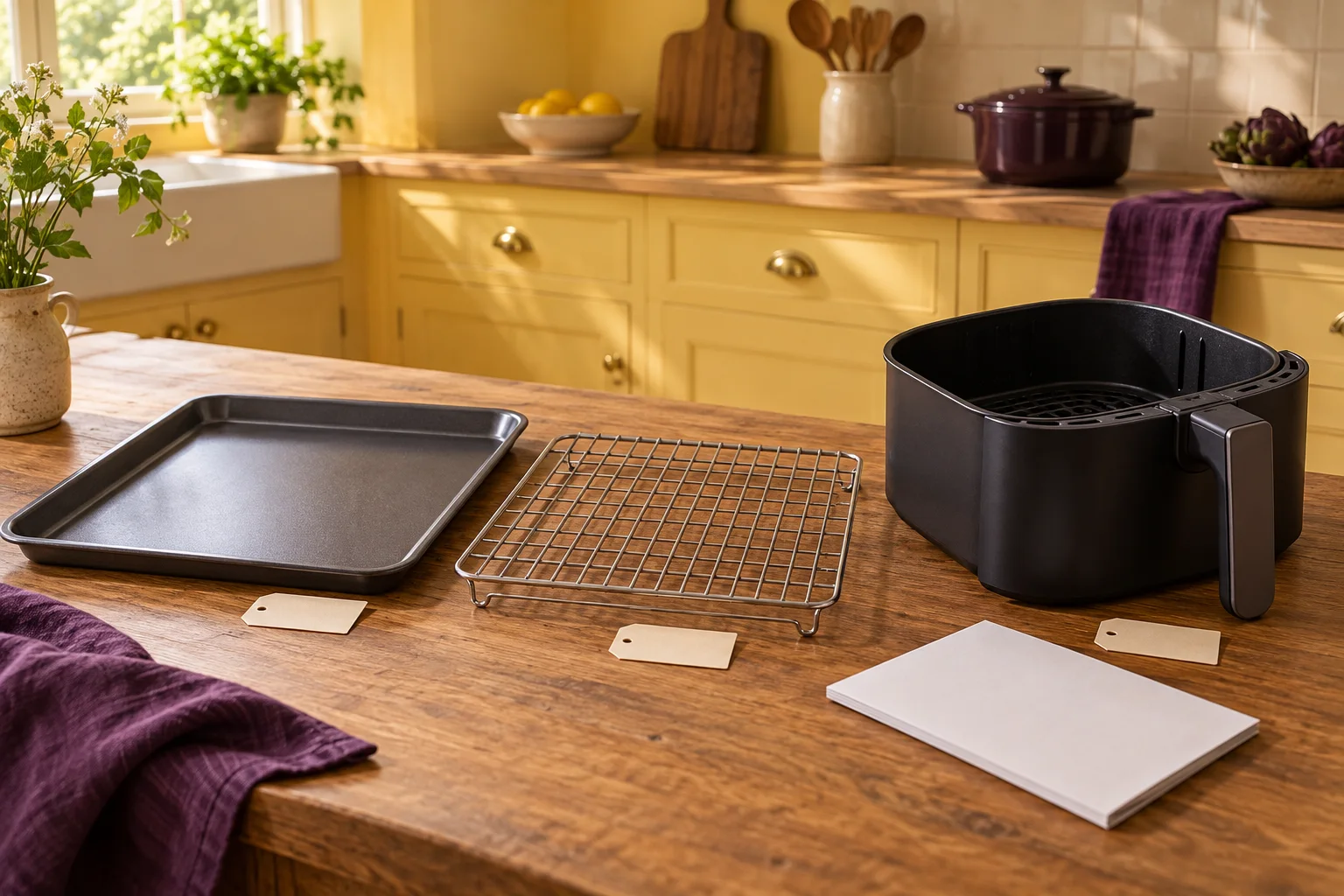
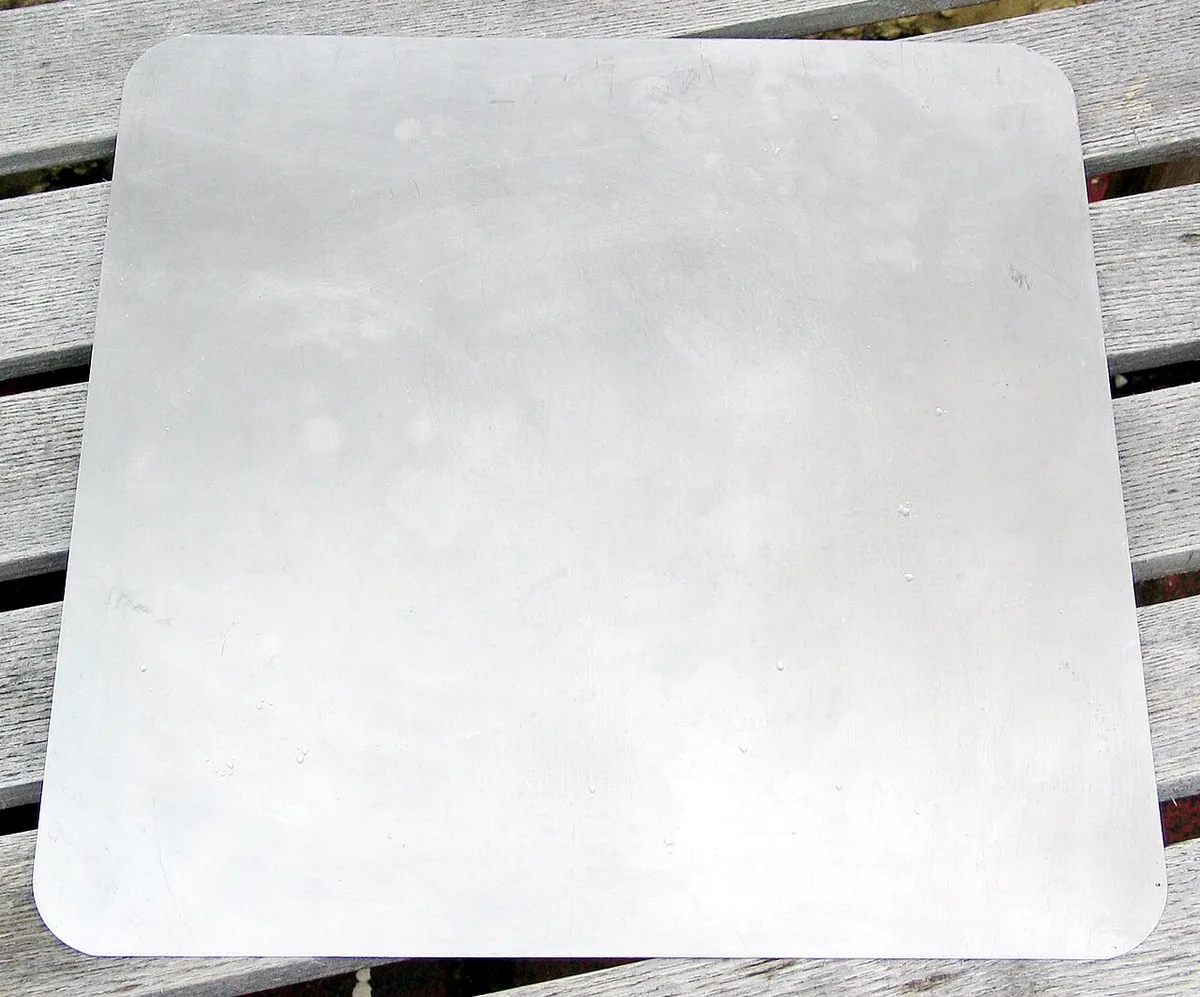
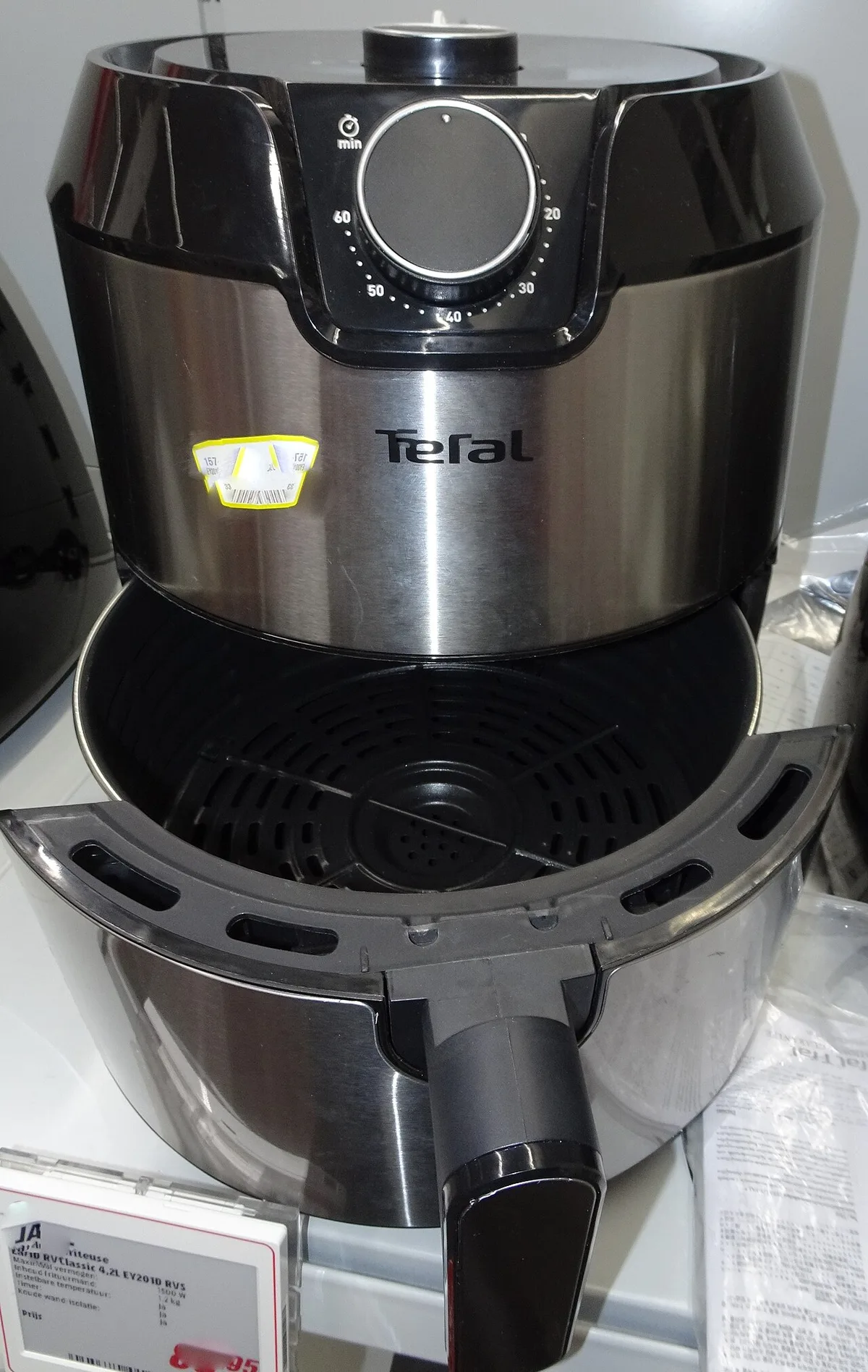
The baking sheet photograph shows a recognisable edge and outline. The air-fryer image shows a drawer and handle. Those are useful visual descriptions, but neither proves that a proposed replacement belongs to your appliance. Similar-looking parts can still be associated with different models or revisions.
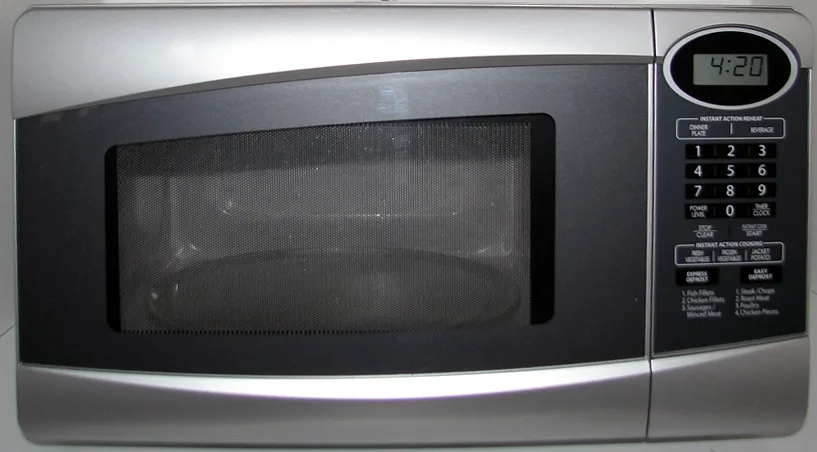
The closed microwave front is an especially limited reference for internal parts. It does not identify them or authorise access to them. This article is about keeping records for the appropriate supplier or service contact, not about opening equipment, modifying parts or performing electrical repairs.
Preserve the scope of a support answer
A useful enquiry includes the full appliance number, proposed part number and a description of the unresolved match. Keep any reply with its date and conditions. If the answer applies only to a particular revision, preserve that limitation rather than recording a broad compatible label.
Distinguish a user accessory from a component that requires professional service. Do not treat an online parts listing as an instruction to replace it yourself. Follow the manufacturer's guidance on who may carry out the relevant work, and retain the source of that guidance alongside the part record.
Update the record when the appliance changes
When replacing an appliance, revisit old accessory notes rather than carrying them forward automatically. A matching brand and exterior size do not establish that a tray, drawer or other part remains suitable. Mark the old record clearly so it cannot be mistaken for evidence about the new model.
This approach can reduce an avoidable mismatch without claiming that we have tested the part or assessed its quality. The decision should rest on the exact identifiers, a traceable compatibility statement and the appropriate instructions. Measurements and photographs remain supporting information whose limits are visible.