Compare electricity scenarios with the assumptions visible
Turn watts and time into a transparent planning calculation without presenting it as measured cooking performance.
Updated:

Keep real specification fields separate from assumptions
Panasonic's cited manual distinguishes microwave output from electrical consumption fields, while SharkNinja's AF400UK product information lists a 2470W rating. Those fields belong to the named products and their documentation. They do not establish a constant draw throughout every cooking session or provide a tested comparison between the appliances.
Before calculating, decide whether each input is a sourced specification, a measurement or an explicit assumption. Preserve the label. Do not use an output figure as if it were automatically electrical input, and do not attach a fictional duration to a real product without making the hypothetical nature clear.
Panasonic NN-ST45KW/ST46KB/ST48KS operating instructions F0003CA22BP ? SharkNinja UK: AF400UK product information ?
Work through one transparent scenario
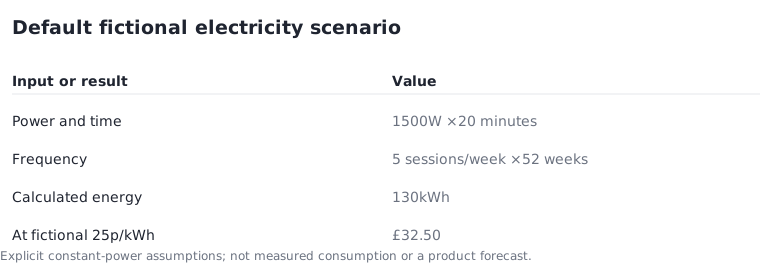
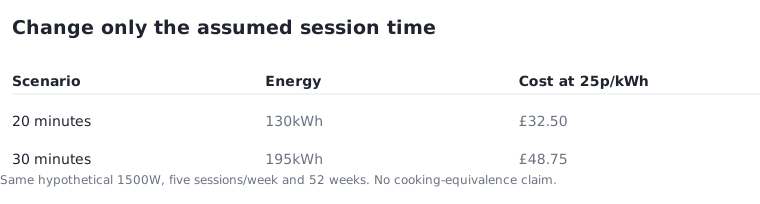
Our default tool example assumes 1500W continuously for 20 minutes per session, five sessions per week and 52 weeks. Multiplying 1.5kW by one third of an hour gives 0.5kWh per session. Across the assumed schedule, that becomes 130kWh. At a fictional tariff of 25p per kWh, the calculated cost is £32.50.
Every input in this example is a planning assumption. The result is not a typical annual bill, an estimate for a named appliance or a measurement of preparing a meal. Actual use can differ in power behaviour, duration and frequency. Replace the defaults with clearly identified inputs appropriate to your own comparison.
Change one assumption and observe the arithmetic
If the same fictional session lasts 30 minutes instead of 20, its calculated energy becomes 0.75kWh. Under the same frequency and tariff assumptions, the total is 195kWh and £48.75. The difference of £16.25 comes entirely from the changed time input; it does not prove that one appliance or cooking method is less efficient.
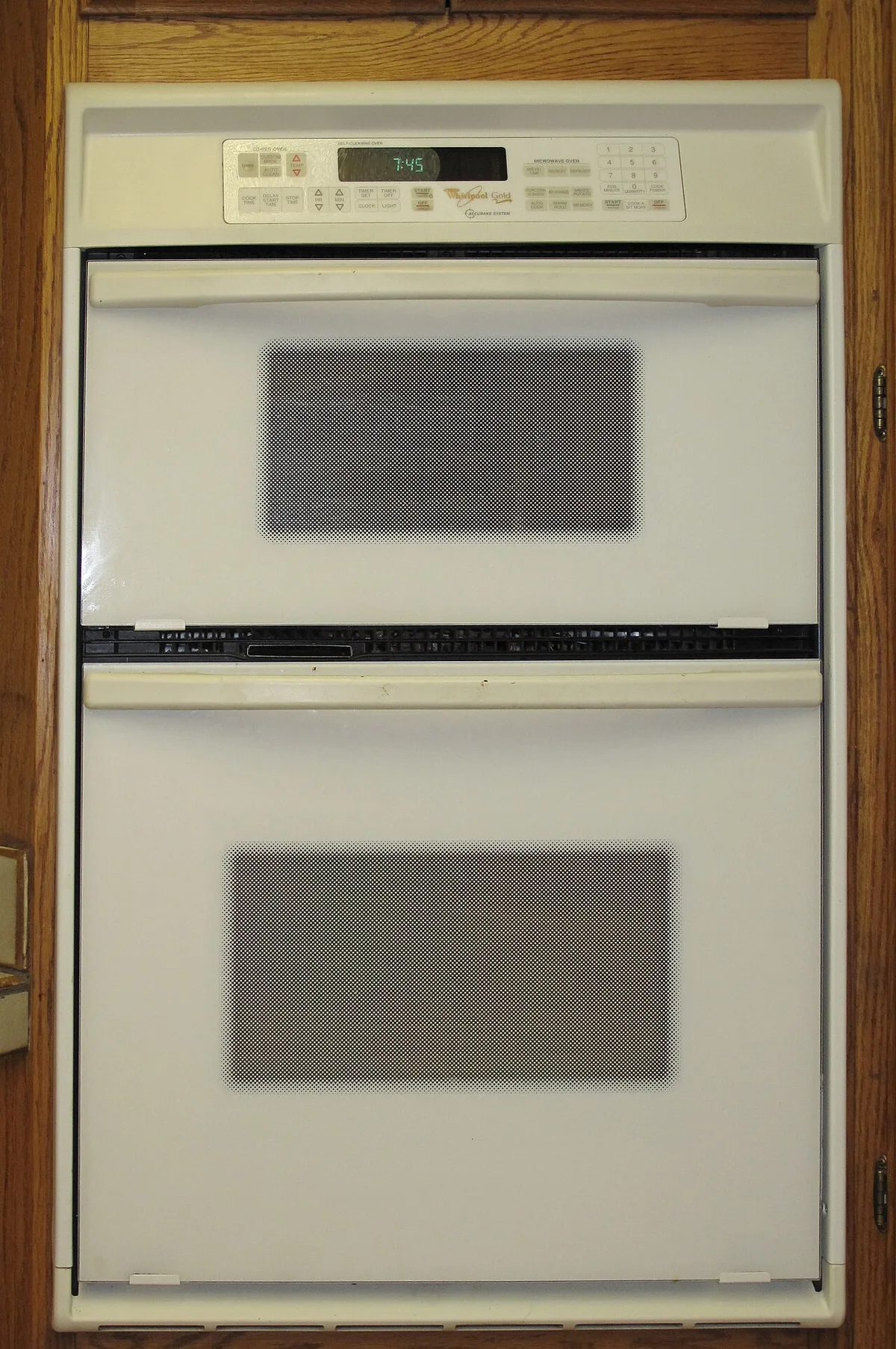
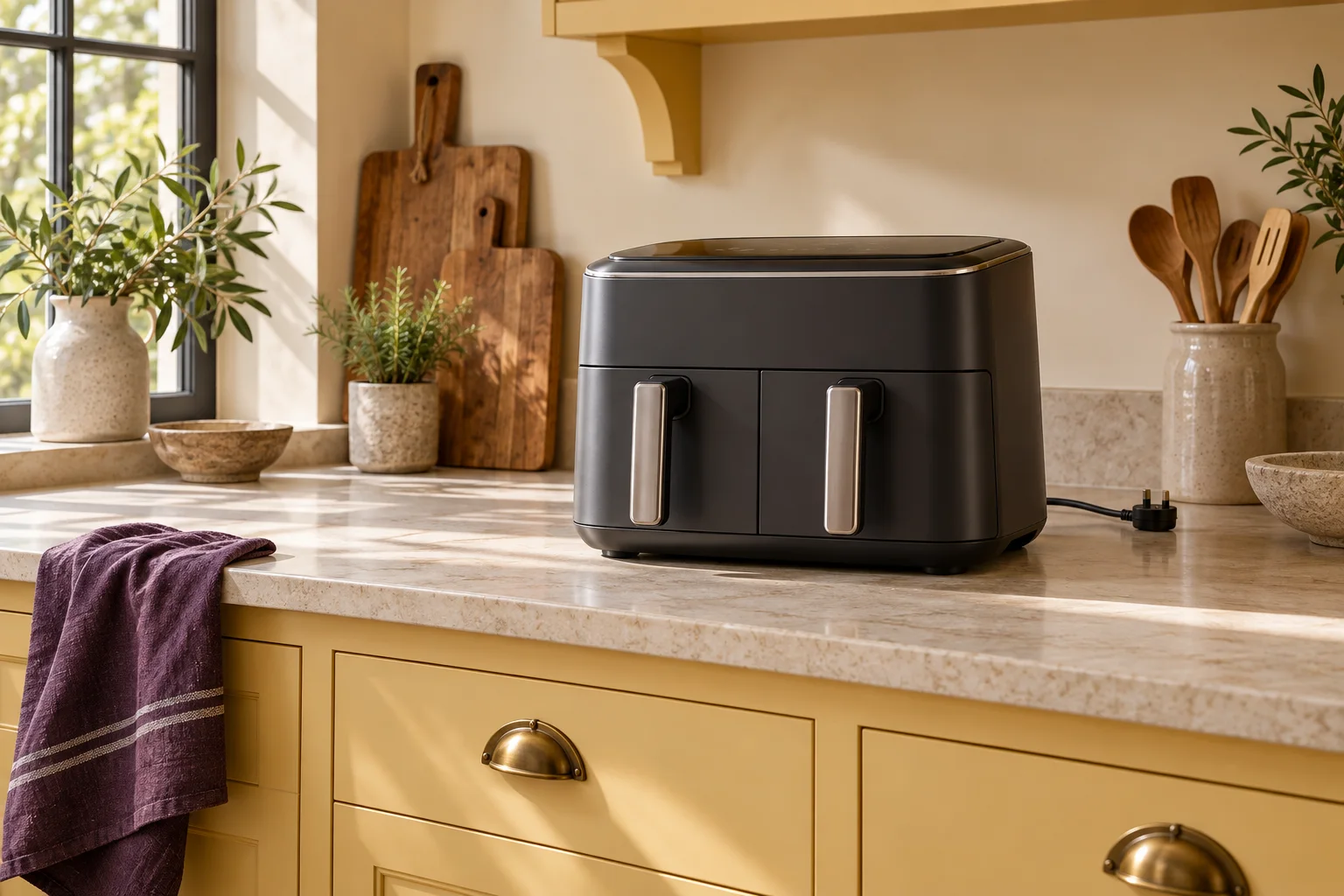
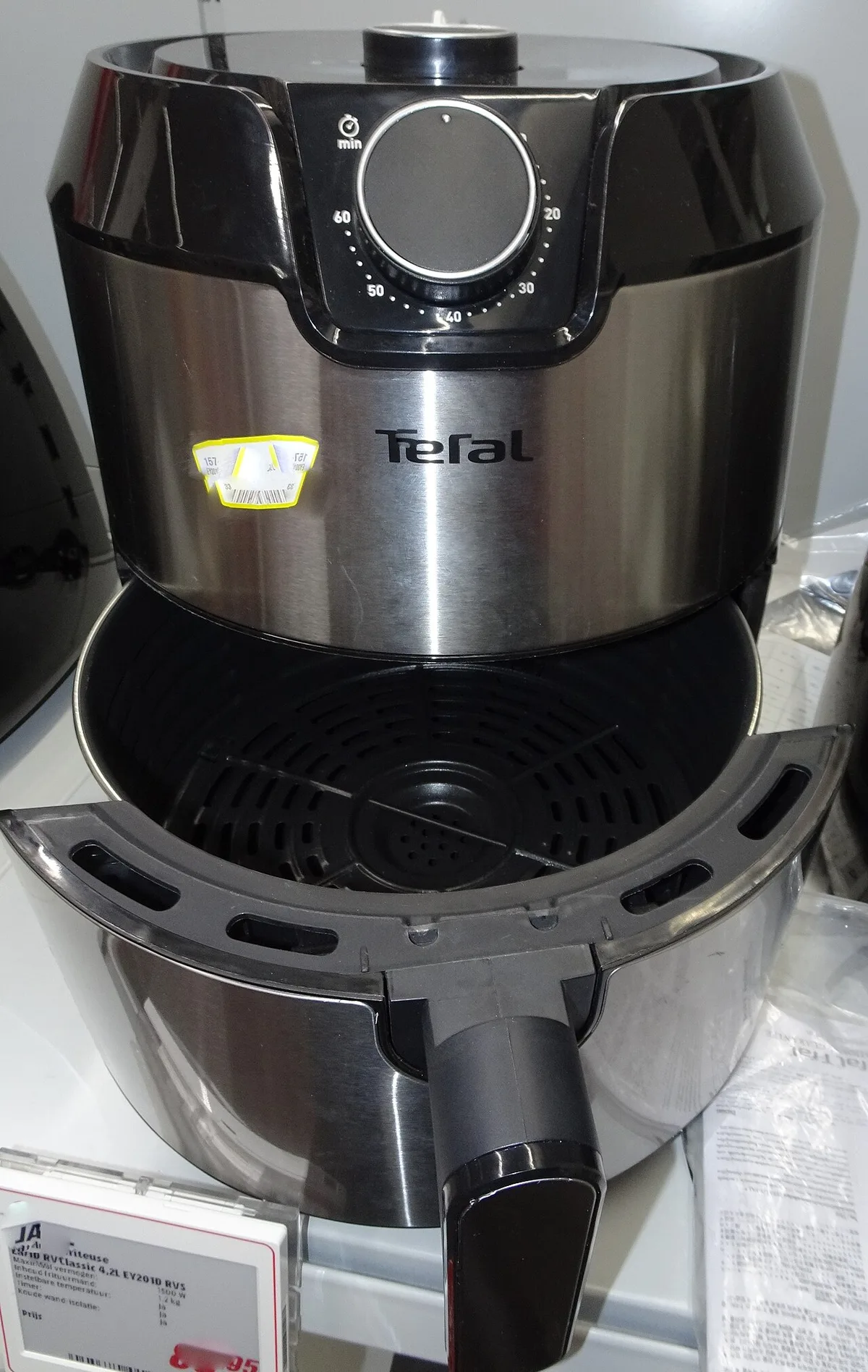
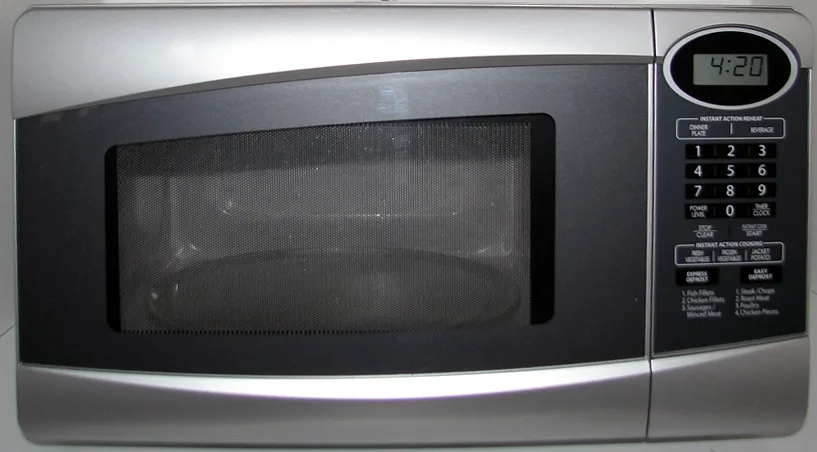
The historical photographs show several appliance forms, but they supply no consumption measurements. Their presence must not be mistaken for evidence that we ran these scenarios on those products. A photograph can identify an appliance shape while leaving every energy input unresolved.
Compare the task as well as the number
Two scenarios are only useful together if you understand what each represents. A shorter duration for one candidate might involve a different quantity, a different mode or an unsupported assumption. Keep those differences visible instead of presenting the currency result as a universal saving.
This site does not supply cooking times or food-safety advice. Use the appropriate instructions for the intended task. For planning, label a comparison as hypothetical where its inputs are hypothetical and avoid precision beyond what those inputs can justify. A calculator can perform exact arithmetic on uncertain numbers without making them certain.
Save a record that can be updated
Keep power, duration, frequency, number of weeks and tariff with the date of the calculation. Add a source or an assumption label to every input. If your tariff changes, you can update that field without silently changing the rest of the scenario.
Use the result alongside fit, compatibility and purchase cost rather than as a stand-alone ranking. A useful decision record shows how the number was obtained and what it leaves out. We have not measured the pictured appliances or verified a cooking-performance advantage; the tool's value is the transparent calculation you can inspect and revise.